Corrupt Bargain: Adams Chosen by the House
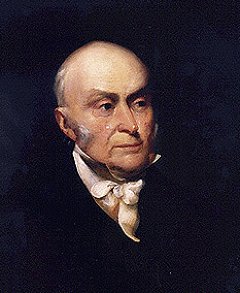
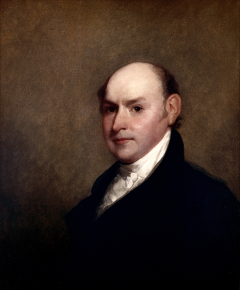
Andrew Jackson won the popular vote, won the most electoral votes, and did not become president. The Election of 1824 was thrown to the House of Representatives after no candidate secured a majority in the Electoral College, and on February 9, 1825, the House chose John Quincy Adams in what Jackson’s supporters immediately branded the "Corrupt Bargain." The accusation would fuel Jackson’s rage, reshape American politics, and help create the modern Democratic Party. Four candidates from the same party, the Democratic-Republicans, split the vote in a one-party election. Jackson received 99 electoral votes, Adams 84, William Crawford 41, and Henry Clay 37. Under the Twelfth Amendment, the House would choose from the top three finishers, eliminating Clay, the powerful Speaker of the House. Clay threw his support to Adams, who shared his vision of a strong federal government investing in internal improvements. Adams won on the first ballot, carrying thirteen of twenty-four state delegations. When Adams then appointed Clay as his Secretary of State, Jackson’s allies erupted. The Secretary of State position was considered the stepping stone to the presidency; three of the previous four presidents had held the post. Jackson called the deal "the judas of the West" and accused Adams and Clay of trading the presidency for a cabinet appointment. Clay denied any prior agreement, and no direct evidence of a corrupt deal has ever surfaced. But the perception was devastating. Adams’s presidency was crippled from its first day by the accusation of illegitimacy. Jackson spent the next four years building a nationwide political organization dedicated to his election in 1828, effectively creating the first modern political party. His movement emphasized popular sovereignty and direct democracy, arguing that the people’s choice had been overridden by Washington insiders. Jackson won the 1828 election in a landslide, carrying every state south and west of New Jersey. The "Corrupt Bargain" narrative became a foundational grievance of Jacksonian democracy and established the template for American populist politics: the virtuous outsider betrayed by a corrupt establishment.
February 9, 1824
202 years ago
Key Figures & Places
What Else Happened on February 9
Leo I needed an heir. His grandson was seven years old. So in 474, he crowned the boy's father — Zeno, an Isaurian chieftain from the mountains of southern Anat…
Bolesław I the Brave marched his forces into Bohemia to reinstall Boleslaus III as Duke, turning the region into a Polish satellite state. This intervention exp…
Bohemond of Taranto won the Battle of Antioch with an army that was starving. His Crusaders had been besieging the city for months, eating their horses, then th…
Chester's Roodee is the oldest racecourse still in use anywhere in the world. The first recorded race happened in 1539, run on a circular track around what used…
Bishop John Hooper endured three agonizing days of burning at the stake in Gloucester for refusing to renounce his Protestant convictions under Queen Mary I. Hi…
Gregory XV ascended to the papacy through acclamation, the final time the College of Cardinals bypassed a formal ballot to reach a unanimous decision. This shif…
Talk to History
Have a conversation with historical figures who witnessed this era. Ask questions, explore perspectives, and bring history to life.