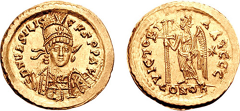
Zeno Flees Throne: Basiliscus Claims Byzantium
Emperor Zeno of Byzantium fled his own capital in the middle of the night in January 475, chased out by a palace coup orchestrated by his mother-in-law Verina and her brother Basiliscus. The empire''s most powerful general seized the throne with the support of disgruntled senators, rival military commanders, and a populace that resented Zeno''s Isaurian origins. The mountainous province of Isauria, in southern Anatolia, was considered barbaric by the sophisticated residents of Constantinople. Zeno was never fully accepted as Roman. Basiliscus had waited decades for this moment. He had served under Emperor Leo I and commanded the disastrous naval expedition against the Vandals in 468, losing over a thousand ships and squandering a fortune. That humiliation should have ended his career. Instead, he survived through family connections and political patience. When Zeno proved unpopular, Basiliscus saw his opening and took it. His twenty-month reign was defined by catastrophic miscalculations. Basiliscus issued the Encyclical, a religious decree that rejected the Council of Chalcedon''s definition of Christ''s nature. The decree was intended to win support from the powerful Monophysite communities in Egypt and Syria, but it enraged the Orthodox establishment in Constantinople. The patriarch Acacius draped the city''s churches in black mourning cloth and preached against the emperor from the pulpit of Hagia Sophia. The religious backlash was immediate and severe. Meanwhile, Basiliscus alienated his own coalition. He elevated his nephew Armatus to positions of dangerous power, sparking jealousy among other generals. The Vandal king Gaiseric exploited the political chaos to raid Greek coastlines with impunity. Verina, who had engineered the coup expecting to control her brother, found herself marginalized and began conspiring against him. When Zeno returned from Isauria with a fresh army in 476, Basiliscus discovered that every ally had abandoned him. He was captured, exiled to a fortress in Cappadocia, and sealed in a dry cistern with his family, left to starve. His reign demonstrated how quickly theological missteps and political arrogance could destroy a Byzantine emperor.
January 9, 475
1551 years ago
Key Figures & Places
What Else Happened on January 9
A classroom without walls. Where kids design their own learning paths and adults are more like collaborative guides than lecturers. Mont-Libre launched with jus…
Aelia Eudoxia ascended the throne as Augusta of the Eastern Roman Empire, wielding unprecedented political influence for a woman of her era. She leveraged this …
Byzantine Emperor Zeno fled his own capital under cover of darkness, his silk imperial robes bundled hastily as he scrambled to escape Constantinople before daw…
Dowager Empress Verina orchestrated a riot in Constantinople that forced her son-in-law Emperor Zeno to flee the capital, aiming to install her lover Patricius …
King Erwig wasn't content with mere political power—he wanted total religious conformity. In a brutal legislative session, he forced Jews to convert or face bru…
The ground didn't just shake. It liquefied. In Dingxiang, China, an earthquake so violent it would obliterate entire villages, swallowing farmsteads and family …
Talk to History
Have a conversation with historical figures who witnessed this era. Ask questions, explore perspectives, and bring history to life.