

Wegener Presents Continental Drift: Everyone Laughs, He's Right
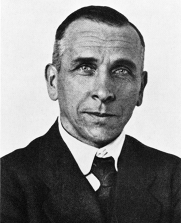
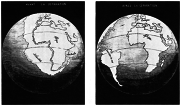
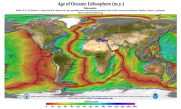
The continents were once one landmass. Alfred Wegener said so at a geological conference in Frankfurt on January 6, 1912, and most of the scientists in the room thought he was wrong. He called it continental drift. His evidence: the coastlines of South America and Africa fit together like puzzle pieces. Identical fossils appeared on both sides of the Atlantic. Mountain ranges in Europe lined up with mountain ranges in North America. His colleagues dismissed him. Wegener was a meteorologist, not a geologist. His mechanism — how exactly the continents moved — was unconvincing. He died in Greenland in 1930, still arguing for his theory. It took another 40 years. In the 1960s, oceanographers discovered mid-ocean ridges and seafloor spreading. Suddenly Wegener's puzzle pieces had a mechanism. His theory became plate tectonics — the foundational framework of modern geology. He never got a Nobel Prize. He didn't live to see vindication.
January 6, 1912
114 years ago
Key Figures & Places


What Else Happened on January 6
Mit einer Ansprache an die Prätorianer eröffnet Kaiser Mark Aurel den römischen Feldzug im Ersten Markomannenkrieg.
au palais de Ponthion, entrevue entre le roi franc Pépin le Bref et le pape Étienne II.
Pope Stephen II crossed the Alps in winter — the first pope to do so — to meet Pepin III at Saint-Denis on January 6, 754. He re-anointed Pepin as King of the F…
Eine polnische Delegation kündigt in Allstedt dem ostfränkisch-deutschen König Heinrich II. das Kommen des polnischen Kronprinzen Mieszko II. Lambert an, der ei…
Knud Ier le Grand est proclamé roi d'Angleterre.
Edward the Confessor died on January 5, 1066. The Witan met the next day and chose Harold Godwinson as king. Harold was crowned in Westminster Abbey on January …
Talk to History
Have a conversation with historical figures who witnessed this era. Ask questions, explore perspectives, and bring history to life.