

Soviet Monopoly Ends: Communist Party Gives Up Power
The Communist Party of the Soviet Union voted itself out of supremacy on February 7, 1990. The Central Committee agreed to renounce Article 6 of the Soviet Constitution, which had guaranteed the Party’s "leading and guiding role" in Soviet society since 1977. The decision, pushed through by General Secretary Mikhail Gorbachev against fierce internal opposition, meant the USSR would permit multiparty elections for the first time in its seventy-three-year history. The Soviet system had begun dismantling itself from the inside. Gorbachev had spent five years trying to reform the Soviet Union without destroying it. His policies of glasnost (openness) and perestroika (restructuring) had unleashed forces he could not control. Eastern European satellite states had broken free in 1989. The Baltic republics were demanding independence. The Soviet economy was collapsing. Hard-liners in the Party blamed Gorbachev’s reforms for the chaos. Reformers argued he was not moving fast enough. Renouncing Article 6 was an attempt to get ahead of the wave rather than be drowned by it. The Central Committee session was contentious. Conservative members warned that abandoning the Party’s constitutional monopoly would lead to the country’s disintegration. They were right, though not in the way they expected. Gorbachev argued that the Party needed to earn its authority through democratic competition rather than constitutional decree. The vote passed, and the Congress of People’s Deputies formally amended the constitution in March 1990. Multiparty elections exposed the Communist Party’s actual level of popular support, which proved thin outside the apparatchik class. Boris Yeltsin, elected president of the Russian Soviet Republic in June 1991, became Gorbachev’s most powerful rival. The failed August 1991 coup by hard-liners who wanted to reverse the reforms accelerated the very collapse they feared. By December 1991, the Soviet Union had dissolved into fifteen independent states. The February 7 vote had not caused the collapse, but it had removed the legal fiction holding the structure together.
February 7, 1990
36 years ago
Key Figures & Places
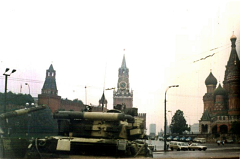
Collapse of the Soviet Union
Wikipedia
Central Committee
Wikipedia
Soviet Communist Party
Wikipedia
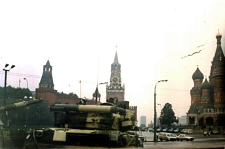
Dissolution of the Soviet Union
Wikipedia

Dissolution of the Soviet Union
Wikipedia
Central committee
Wikipedia

Communist Party of the Soviet Union
Wikipedia

Moscow
Wikipedia
Central Committee of the Communist Party of the Soviet Union
Wikipedia
One-party state
Wikipedia
What Else Happened on February 7
Leo I became emperor because the army couldn't agree on anyone. So they asked Aspar, a barbarian general who couldn't legally take the throne himself. He picked…
Leo I became emperor because the army commander didn't want the job. Aspar, an Alan general who effectively ran the Eastern Roman Empire, couldn't take the thro…
Two of Basil II's best generals turned on him at once. Bardas Phokas the Younger and Bardas Skleros — both from military aristocracy, both commanding armies, bo…
Pandulf IV of Benevento fell in battle against invading Norman forces at Montesarchio, ending his long, turbulent reign as the Prince of Benevento. His death cl…
Mongol forces razed the city of Vladimir, systematically slaughtering the inhabitants and incinerating the Cathedral of the Assumption. This brutal conquest sha…
Anti-Unionist clergy gathered at the Blachernae synod to formally condemn the former patriarch John XI of Constantinople for his support of the Council of Lyon.…
Talk to History
Have a conversation with historical figures who witnessed this era. Ask questions, explore perspectives, and bring history to life.