

Astronauts Fly Free: First Untethered Spacewalk
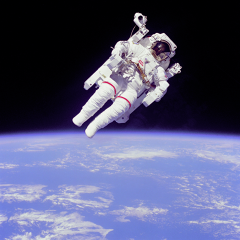
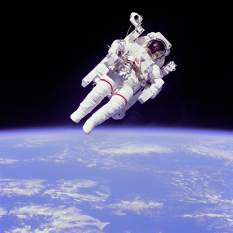
Astronaut Bruce McCandless floated 320 feet from the Space Shuttle Challenger on February 7, 1984, farther from any spacecraft than any human had ever been, with nothing connecting him to the ship except a radio signal. He was propelled by the Manned Maneuvering Unit, a nitrogen-gas-powered jetpack strapped to his spacesuit, moving through the void at 17,500 miles per hour relative to Earth’s surface. If the MMU failed, he would drift away and die. The photograph of his solitary figure against the blue curve of the planet became one of NASA’s most recognized images. McCandless had waited twenty years for this moment. He joined the astronaut corps in 1966 and served as capsule communicator for Apollo 11, relaying messages between Houston and the lunar surface. He was then assigned to help develop the MMU, a backpack-sized propulsion system that would allow astronauts to maneuver independently in space without tethers. The device used twenty-four nitrogen-gas thrusters controlled by joysticks on each armrest, with enough fuel for approximately six hours of operation. The STS-41-B mission launched on February 3, 1984, with McCandless and fellow astronaut Robert L. Stewart scheduled to test the MMU on separate spacewalks. McCandless went first. He backed away from the shuttle bay slowly, testing the thrusters in small increments, then flew out to a distance of 320 feet. The shuttle crew, commanded by Vance Brand, watched from the flight deck. Mission Control monitored his vital signs and fuel consumption. Stewart performed his own MMU flight the following day. The untethered spacewalk demonstrated that astronauts could work freely in space, a capability NASA considered essential for satellite repair, construction of space stations, and eventually assembling large structures in orbit. The MMU was used on three shuttle missions before being retired after the Challenger disaster in 1986 prompted a reassessment of acceptable risk. No astronaut has performed a fully untethered spacewalk since. McCandless’s photograph endures as the defining image of human freedom in space.
February 7, 1984
42 years ago
Key Figures & Places
Space Shuttle program
Wikipedia
Astronaut
Wikipedia
STS-41-B
Wikipedia
Bruce McCandless II
Wikipedia
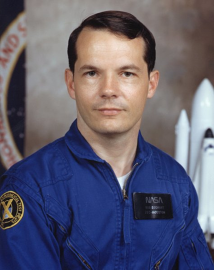
Robert L. Stewart
Wikipedia
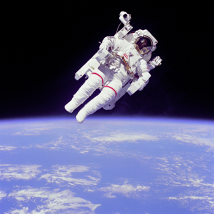
Manned Maneuvering Unit
Wikipedia
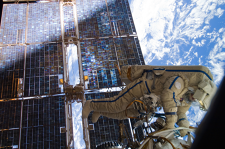
space walk
Wikipedia

Space Shuttle program
Wikipedia

STS-41-B
Wikipedia

Bruce McCandless II
Wikipedia

Robert L. Stewart
Wikipedia

walk in space
Wikipedia
Manned Maneuvering Unit
Wikipedia

Transbordador espacial
Wikipedia

Space Shuttle Challenger
Wikipedia

Space Shuttle
Wikipedia

Space Shuttle Atlantis
Wikipedia

STS-98
Wikipedia
Destiny
Wikipedia

International Space Station
Wikipedia
What Else Happened on February 7
Leo I became emperor because the army couldn't agree on anyone. So they asked Aspar, a barbarian general who couldn't legally take the throne himself. He picked…
Leo I became emperor because the army commander didn't want the job. Aspar, an Alan general who effectively ran the Eastern Roman Empire, couldn't take the thro…
Two of Basil II's best generals turned on him at once. Bardas Phokas the Younger and Bardas Skleros — both from military aristocracy, both commanding armies, bo…
Pandulf IV of Benevento fell in battle against invading Norman forces at Montesarchio, ending his long, turbulent reign as the Prince of Benevento. His death cl…
Mongol forces razed the city of Vladimir, systematically slaughtering the inhabitants and incinerating the Cathedral of the Assumption. This brutal conquest sha…
Anti-Unionist clergy gathered at the Blachernae synod to formally condemn the former patriarch John XI of Constantinople for his support of the Council of Lyon.…
Talk to History
Have a conversation with historical figures who witnessed this era. Ask questions, explore perspectives, and bring history to life.