
Today In History logo TIH

Today In History

May 25 in History

Your birthday shares the stage with stories that shaped the world. Born on this day: Mike Myers, Emperor Shenzong of Song (d. 1085), and Klaus Meine.

George Floyd Killed: Global Racial Justice Movement Erupts
2020Death

George Floyd Killed: Global Racial Justice Movement Erupts

A convenience store clerk called the police over a suspected counterfeit $20 bill, and the arrest that followed was recorded on a bystander's phone for nine minutes and 29 seconds. On May 25, 2020, Minneapolis police officer Derek Chauvin knelt on George Floyd's neck while Floyd lay handcuffed and face-down on the pavement, repeating "I can't breathe" until he went silent. Floyd was 46 years old. Darnella Frazier, a 17-year-old passing by with her cousin, filmed the encounter on her phone. The video showed Chauvin maintaining pressure on Floyd's neck while three other officers watched or assisted. Bystanders pleaded with the officers to check Floyd's pulse. Chauvin did not move until paramedics arrived. Floyd was pronounced dead at Hennepin County Medical Center. Frazier posted the video that evening. Within 48 hours, protests erupted in Minneapolis, then spread to all 50 states and at least 60 countries. The Minneapolis Third Precinct police station was abandoned and burned. National Guard troops deployed to multiple American cities. An estimated 15 to 26 million people participated in demonstrations over the following weeks, making the George Floyd protests the largest mass movement in U.S. history by participation. Chauvin was convicted of second-degree murder, third-degree murder, and manslaughter in April 2021, and sentenced to 22.5 years in state prison. The three other officers were convicted of federal civil rights violations. Minneapolis banned the use of chokeholds and neck restraints. The movement accelerated police reform legislation at city and state levels across the country. Corporate and institutional responses to racial inequality reshaped workplace policies, philanthropic commitments, and public discourse. Floyd's death became a defining event of the decade, a moment when a phone camera and a public sidewalk produced consequences that legislation and advocacy alone had not.

Famous Birthdays

Mike Myers
Mike Myers

b. 1963

Emperor Shenzong of Song (d. 1085)

Emperor Shenzong of Song (d. 1085)

b. 1048

Klaus Meine

Klaus Meine

b. 1948

Paul Weller

Paul Weller

b. 1958

Yahya Jammeh

Yahya Jammeh

b. 1965

Gene Tunney

Gene Tunney

d. 1978

Jack Steinberger

Jack Steinberger

b. 1921

John Mott

John Mott

1865–1955

Kazi Nazrul Islam

Kazi Nazrul Islam

d. 1976

Pieter Zeeman

Pieter Zeeman

1865–1943

Historical Events

Fifty-five men gathered in Philadelphia to fix the Articles of Confederation and ended up inventing a new form of government. The Constitutional Convention opened on May 25, 1787, at the Pennsylvania State House, and over the next four months, the delegates produced the document that would become the longest-surviving written national constitution in history.

The Articles of Confederation, ratified in 1781, had created a central government so weak it could not levy taxes, regulate commerce, or enforce its own laws. Shays' Rebellion in Massachusetts in 1786, an armed uprising by indebted farmers, had exposed the government's inability to maintain order. Twelve of the thirteen states sent delegates to Philadelphia. Rhode Island refused.

The Virginia delegation arrived first and came with a plan. James Madison's Virginia Plan proposed scrapping the Articles entirely and creating a bicameral legislature with representation proportional to population. Smaller states resisted, countering with the New Jersey Plan, which preserved equal state representation. The impasse threatened to dissolve the convention until Roger Sherman of Connecticut brokered the Great Compromise: proportional representation in the House, equal representation in the Senate.

The delegates argued through a sweltering summer behind closed doors, with sentries posted and windows nailed shut to prevent leaks. They debated executive power, slavery (producing the notorious three-fifths clause), judicial review, and the balance between federal and state authority. George Washington presided, lending his enormous prestige to a process that might otherwise have collapsed.

The finished Constitution was signed on September 17, 1787, and sent to the states for ratification. Only 39 of the original 55 delegates signed. Benjamin Franklin, at 81 the oldest delegate, observed that the sun painted on Washington's chair was rising, not setting. The document those men produced has been amended 27 times and survived a civil war, two world wars, and 239 years of continuous governance.
1787

Fifty-five men gathered in Philadelphia to fix the Articles of Confederation and ended up inventing a new form of government. The Constitutional Convention opened on May 25, 1787, at the Pennsylvania State House, and over the next four months, the delegates produced the document that would become the longest-surviving written national constitution in history. The Articles of Confederation, ratified in 1781, had created a central government so weak it could not levy taxes, regulate commerce, or enforce its own laws. Shays' Rebellion in Massachusetts in 1786, an armed uprising by indebted farmers, had exposed the government's inability to maintain order. Twelve of the thirteen states sent delegates to Philadelphia. Rhode Island refused. The Virginia delegation arrived first and came with a plan. James Madison's Virginia Plan proposed scrapping the Articles entirely and creating a bicameral legislature with representation proportional to population. Smaller states resisted, countering with the New Jersey Plan, which preserved equal state representation. The impasse threatened to dissolve the convention until Roger Sherman of Connecticut brokered the Great Compromise: proportional representation in the House, equal representation in the Senate. The delegates argued through a sweltering summer behind closed doors, with sentries posted and windows nailed shut to prevent leaks. They debated executive power, slavery (producing the notorious three-fifths clause), judicial review, and the balance between federal and state authority. George Washington presided, lending his enormous prestige to a process that might otherwise have collapsed. The finished Constitution was signed on September 17, 1787, and sent to the states for ratification. Only 39 of the original 55 delegates signed. Benjamin Franklin, at 81 the oldest delegate, observed that the sun painted on Washington's chair was rising, not setting. The document those men produced has been amended 27 times and survived a civil war, two world wars, and 239 years of continuous governance.

Forty-five minutes. Four events. Three world records and one world-record tie. Jesse Owens delivered the single greatest individual performance in track and field history on May 25, 1935, at the Big Ten Championships in Ann Arbor, Michigan, and he did it with a back so injured his teammates had to help him into the car that morning.

Owens had slipped on the stairs at his rooming house the week before and could barely bend over. Ohio State coach Larry Snyder considered scratching him. Owens insisted on competing, and at 3:15 PM, he tied the world record of 9.4 seconds in the 100-yard dash. Ten minutes later, he long-jumped 26 feet 8.25 inches, a world record that would stand for 25 years.

At 3:34 PM, he ran the 220-yard dash in 20.3 seconds, breaking the existing record. At 4:00 PM, he completed the 220-yard low hurdles in 22.6 seconds, another world record. Each performance was accomplished with a single attempt: one dash, one jump, one race, one race.

Owens was 21 years old, the grandson of enslaved people, and the son of Alabama sharecroppers who had migrated to Cleveland. Track and field in 1935 was one of the few arenas where a Black athlete could compete against white athletes on equal terms, and Owens dominated so completely that the question of equality became absurd.

Sixteen months later, Owens won four gold medals at the Berlin Olympics, embarrassing Adolf Hitler's claims of Aryan supremacy on the world stage. But the Ann Arbor performance was arguably more extraordinary: no Olympic venue, no political drama, just an injured young man producing four perfect athletic moments in less than an hour on a spring afternoon in Michigan.
1935

Forty-five minutes. Four events. Three world records and one world-record tie. Jesse Owens delivered the single greatest individual performance in track and field history on May 25, 1935, at the Big Ten Championships in Ann Arbor, Michigan, and he did it with a back so injured his teammates had to help him into the car that morning. Owens had slipped on the stairs at his rooming house the week before and could barely bend over. Ohio State coach Larry Snyder considered scratching him. Owens insisted on competing, and at 3:15 PM, he tied the world record of 9.4 seconds in the 100-yard dash. Ten minutes later, he long-jumped 26 feet 8.25 inches, a world record that would stand for 25 years. At 3:34 PM, he ran the 220-yard dash in 20.3 seconds, breaking the existing record. At 4:00 PM, he completed the 220-yard low hurdles in 22.6 seconds, another world record. Each performance was accomplished with a single attempt: one dash, one jump, one race, one race. Owens was 21 years old, the grandson of enslaved people, and the son of Alabama sharecroppers who had migrated to Cleveland. Track and field in 1935 was one of the few arenas where a Black athlete could compete against white athletes on equal terms, and Owens dominated so completely that the question of equality became absurd. Sixteen months later, Owens won four gold medals at the Berlin Olympics, embarrassing Adolf Hitler's claims of Aryan supremacy on the world stage. But the Ann Arbor performance was arguably more extraordinary: no Olympic venue, no political drama, just an injured young man producing four perfect athletic moments in less than an hour on a spring afternoon in Michigan.

An artillery crew fired a nuclear warhead from a cannon and nobody was sure the gun would survive the shot. On May 25, 1953, the United States detonated a 15-kiloton nuclear artillery shell at the Nevada Test Site as part of Operation Upshot-Knothole, and the Atomic Age took another step toward tactical warfare.

The weapon, codenamed Grable, was fired from a massive 280mm M65 cannon nicknamed "Atomic Annie." The gun weighed 85 tons and required two tractors to haul it into position. At 8:30 AM, the crew fired the shell toward a target area seven miles downrange. Eleven seconds later, a nuclear fireball erupted over Frenchman Flat, producing a mushroom cloud visible from Las Vegas.

Roughly 3,000 soldiers were positioned in trenches just seven miles from ground zero to study the tactical effects of nuclear weapons on ground forces. They watched the detonation, then advanced toward the blast site in a training exercise. No one at the time fully understood the radiation exposure risks, and many of those soldiers later suffered health consequences that the government took decades to acknowledge.

The test was designed to prove that nuclear weapons could be delivered by conventional artillery on a European battlefield. NATO strategy in the 1950s assumed that Soviet numerical superiority in ground forces could be offset by tactical nuclear weapons. Atomic Annie gave that doctrine a physical form: a weapon that could be deployed alongside regular troops.

The M65 cannon was deployed to Europe and remained in service until 1963, when nuclear-capable missiles made it obsolete. Grable remains the only nuclear artillery shell ever fired in a live test, a single demonstration of a concept so terrifying that even Cold War planners eventually pulled back from it.
1953

An artillery crew fired a nuclear warhead from a cannon and nobody was sure the gun would survive the shot. On May 25, 1953, the United States detonated a 15-kiloton nuclear artillery shell at the Nevada Test Site as part of Operation Upshot-Knothole, and the Atomic Age took another step toward tactical warfare. The weapon, codenamed Grable, was fired from a massive 280mm M65 cannon nicknamed "Atomic Annie." The gun weighed 85 tons and required two tractors to haul it into position. At 8:30 AM, the crew fired the shell toward a target area seven miles downrange. Eleven seconds later, a nuclear fireball erupted over Frenchman Flat, producing a mushroom cloud visible from Las Vegas. Roughly 3,000 soldiers were positioned in trenches just seven miles from ground zero to study the tactical effects of nuclear weapons on ground forces. They watched the detonation, then advanced toward the blast site in a training exercise. No one at the time fully understood the radiation exposure risks, and many of those soldiers later suffered health consequences that the government took decades to acknowledge. The test was designed to prove that nuclear weapons could be delivered by conventional artillery on a European battlefield. NATO strategy in the 1950s assumed that Soviet numerical superiority in ground forces could be offset by tactical nuclear weapons. Atomic Annie gave that doctrine a physical form: a weapon that could be deployed alongside regular troops. The M65 cannon was deployed to Europe and remained in service until 1963, when nuclear-capable missiles made it obsolete. Grable remains the only nuclear artillery shell ever fired in a live test, a single demonstration of a concept so terrifying that even Cold War planners eventually pulled back from it.

Thirty-two theaters. That is all the studio was willing to risk. On May 25, 1977, Twentieth Century Fox opened Star Wars in a handful of cinemas, and within a week, lines wrapped around city blocks and the modern blockbuster was born.

George Lucas had spent four years developing the film, drawing on Akira Kurosawa's samurai films, Flash Gordon serials, Joseph Campbell's mythology scholarship, and his own childhood in Modesto, California. Every major studio except Fox had turned the project down. Fox executives remained nervous enough to schedule the release on a Wednesday before Memorial Day weekend, typically a dead zone in the calendar.

The film earned $461,000 on its opening day. Audiences had never seen anything like it: a lived-in universe of battered spaceships, laser swords, and a villain who breathed like a machine. Industrial Light and Magic, the effects company Lucas created specifically for the film, developed technologies that became industry standards. John Williams's orchestral score revived symphonic film music after a decade of pop soundtracks.

Star Wars grossed $775 million worldwide, becoming the highest-grossing film in history at that time. Merchandising revenue eventually dwarfed ticket sales. The licensing deal Lucas had negotiated, which Fox considered worthless, generated billions in toy, clothing, and publishing sales.

The film reshaped Hollywood's business model. Studios began chasing summer tentpole releases, building franchises, and investing in special effects. The blockbuster era displaced the director-driven New Hollywood movement of the early 1970s. For better or worse, Lucas proved that a single film could become a cultural infrastructure, generating sequels, prequels, television series, theme park attractions, and a global mythology that billions of people recognize on sight.
1977

Thirty-two theaters. That is all the studio was willing to risk. On May 25, 1977, Twentieth Century Fox opened Star Wars in a handful of cinemas, and within a week, lines wrapped around city blocks and the modern blockbuster was born. George Lucas had spent four years developing the film, drawing on Akira Kurosawa's samurai films, Flash Gordon serials, Joseph Campbell's mythology scholarship, and his own childhood in Modesto, California. Every major studio except Fox had turned the project down. Fox executives remained nervous enough to schedule the release on a Wednesday before Memorial Day weekend, typically a dead zone in the calendar. The film earned $461,000 on its opening day. Audiences had never seen anything like it: a lived-in universe of battered spaceships, laser swords, and a villain who breathed like a machine. Industrial Light and Magic, the effects company Lucas created specifically for the film, developed technologies that became industry standards. John Williams's orchestral score revived symphonic film music after a decade of pop soundtracks. Star Wars grossed $775 million worldwide, becoming the highest-grossing film in history at that time. Merchandising revenue eventually dwarfed ticket sales. The licensing deal Lucas had negotiated, which Fox considered worthless, generated billions in toy, clothing, and publishing sales. The film reshaped Hollywood's business model. Studios began chasing summer tentpole releases, building franchises, and investing in special effects. The blockbuster era displaced the director-driven New Hollywood movement of the early 1970s. For better or worse, Lucas proved that a single film could become a cultural infrastructure, generating sequels, prequels, television series, theme park attractions, and a global mythology that billions of people recognize on sight.

After 22 years, the last Israeli soldier crossed the border heading south, and Lebanon's sovereignty over its southern territory was restored without a peace agreement, without a ceremony, and without any guarantee it would last. On May 24, 2000, the Israel Defense Forces completed their withdrawal from southern Lebanon, ending an occupation that had begun with Operation Litani in 1978 and expanded dramatically with the 1982 invasion.

Israel had entered Lebanon to destroy the Palestine Liberation Organization's infrastructure and create a security buffer zone along its northern border. The 1982 invasion reached Beirut, but the occupation quickly became a quagmire. Hezbollah, formed in 1982 with Iranian support, waged a guerrilla campaign that inflicted a steady toll of Israeli casualties throughout the 1990s.

Israeli public opinion turned against the occupation after years of soldiers coming home in coffins from a war with no clear exit strategy. The Four Mothers movement, founded by bereaved families, lobbied intensely for withdrawal. Prime Minister Ehud Barak had campaigned on a pledge to leave Lebanon within a year of taking office, and he delivered.

The withdrawal happened faster than planned. Israel's proxy militia, the South Lebanon Army, collapsed as IDF positions were vacated. SLA fighters and their families fled across the border into Israel. Lebanese civilians streamed into the abandoned security zone, and Hezbollah fighters planted their flag on the border fence.

Hezbollah declared victory and used the withdrawal as proof that armed resistance could succeed where diplomacy had failed. The organization's prestige soared across the Arab world. Six years later, a Hezbollah cross-border raid triggered the 2006 Lebanon War, demonstrating that Israel's departure had not resolved the underlying conflict but merely relocated it.
2000

After 22 years, the last Israeli soldier crossed the border heading south, and Lebanon's sovereignty over its southern territory was restored without a peace agreement, without a ceremony, and without any guarantee it would last. On May 24, 2000, the Israel Defense Forces completed their withdrawal from southern Lebanon, ending an occupation that had begun with Operation Litani in 1978 and expanded dramatically with the 1982 invasion. Israel had entered Lebanon to destroy the Palestine Liberation Organization's infrastructure and create a security buffer zone along its northern border. The 1982 invasion reached Beirut, but the occupation quickly became a quagmire. Hezbollah, formed in 1982 with Iranian support, waged a guerrilla campaign that inflicted a steady toll of Israeli casualties throughout the 1990s. Israeli public opinion turned against the occupation after years of soldiers coming home in coffins from a war with no clear exit strategy. The Four Mothers movement, founded by bereaved families, lobbied intensely for withdrawal. Prime Minister Ehud Barak had campaigned on a pledge to leave Lebanon within a year of taking office, and he delivered. The withdrawal happened faster than planned. Israel's proxy militia, the South Lebanon Army, collapsed as IDF positions were vacated. SLA fighters and their families fled across the border into Israel. Lebanese civilians streamed into the abandoned security zone, and Hezbollah fighters planted their flag on the border fence. Hezbollah declared victory and used the withdrawal as proof that armed resistance could succeed where diplomacy had failed. The organization's prestige soared across the Arab world. Six years later, a Hezbollah cross-border raid triggered the 2006 Lebanon War, demonstrating that Israel's departure had not resolved the underlying conflict but merely relocated it.

2000

Israel completed its withdrawal from Lebanese territory 18 years after the 1982 invasion, pulling forces from the self-declared security zone except for the contested Shebaa Farms. The retreat vindicated Hezbollah's resistance strategy and reshaped the group's political legitimacy in Lebanon, while leaving unresolved border disputes that would erupt again in the 2006 war. The withdrawal, completed on May 24, 2000, was celebrated in Lebanon as Liberation Day and marked the end of Israel's longest military occupation. The security zone, a strip of southern Lebanon roughly 10 to 15 kilometers deep, had been maintained since 1985 to protect northern Israel from cross-border attacks by Palestinian and later Hezbollah fighters. Israel's proxy force, the South Lebanon Army, had policed the zone with Israeli support for over a decade. The decision to withdraw was driven by growing Israeli casualties from Hezbollah guerrilla attacks, declining public support for the occupation, and Prime Minister Ehud Barak's campaign promise to bring the soldiers home. The withdrawal happened faster than planned: as SLA positions collapsed and fighters deserted, the Israeli military accelerated its pullback to avoid being caught in the disintegration. SLA members and their families who had collaborated with Israel scrambled to cross the border, with some welcomed into Israel and others left behind. Hezbollah marched into the evacuated zone to triumphant celebrations, claiming credit for driving out the Israeli military through armed resistance rather than negotiation. The group's stature grew enormously within Lebanon and across the Arab world. The Shebaa Farms dispute, involving a small area claimed by both Lebanon and Syria, provided Hezbollah with a continued justification for maintaining its arsenal.
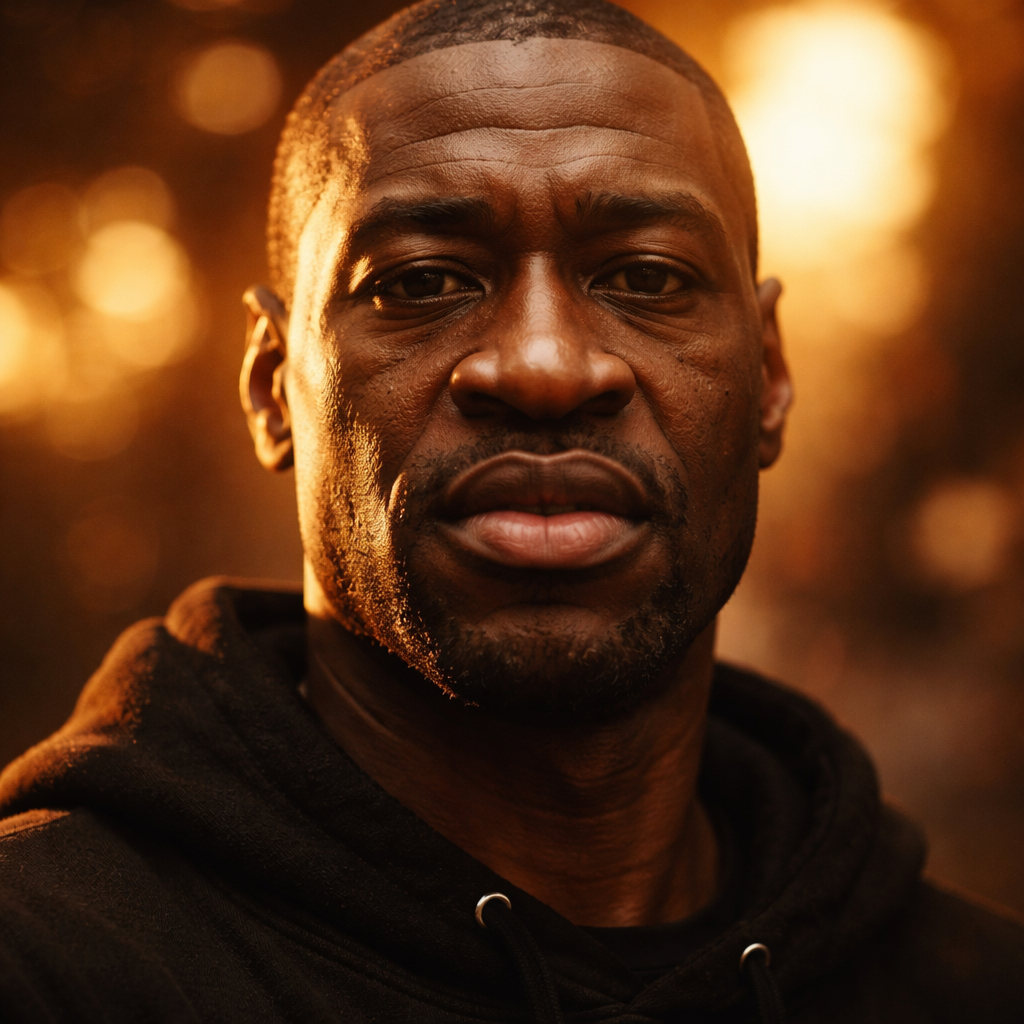
A convenience store clerk called the police over a suspected counterfeit $20 bill, and the arrest that followed was recorded on a bystander's phone for nine minutes and 29 seconds. On May 25, 2020, Minneapolis police officer Derek Chauvin knelt on George Floyd's neck while Floyd lay handcuffed and face-down on the pavement, repeating "I can't breathe" until he went silent. Floyd was 46 years old.

Darnella Frazier, a 17-year-old passing by with her cousin, filmed the encounter on her phone. The video showed Chauvin maintaining pressure on Floyd's neck while three other officers watched or assisted. Bystanders pleaded with the officers to check Floyd's pulse. Chauvin did not move until paramedics arrived. Floyd was pronounced dead at Hennepin County Medical Center.

Frazier posted the video that evening. Within 48 hours, protests erupted in Minneapolis, then spread to all 50 states and at least 60 countries. The Minneapolis Third Precinct police station was abandoned and burned. National Guard troops deployed to multiple American cities. An estimated 15 to 26 million people participated in demonstrations over the following weeks, making the George Floyd protests the largest mass movement in U.S. history by participation.

Chauvin was convicted of second-degree murder, third-degree murder, and manslaughter in April 2021, and sentenced to 22.5 years in state prison. The three other officers were convicted of federal civil rights violations. Minneapolis banned the use of chokeholds and neck restraints.

The movement accelerated police reform legislation at city and state levels across the country. Corporate and institutional responses to racial inequality reshaped workplace policies, philanthropic commitments, and public discourse. Floyd's death became a defining event of the decade, a moment when a phone camera and a public sidewalk produced consequences that legislation and advocacy alone had not.
2020

A convenience store clerk called the police over a suspected counterfeit $20 bill, and the arrest that followed was recorded on a bystander's phone for nine minutes and 29 seconds. On May 25, 2020, Minneapolis police officer Derek Chauvin knelt on George Floyd's neck while Floyd lay handcuffed and face-down on the pavement, repeating "I can't breathe" until he went silent. Floyd was 46 years old. Darnella Frazier, a 17-year-old passing by with her cousin, filmed the encounter on her phone. The video showed Chauvin maintaining pressure on Floyd's neck while three other officers watched or assisted. Bystanders pleaded with the officers to check Floyd's pulse. Chauvin did not move until paramedics arrived. Floyd was pronounced dead at Hennepin County Medical Center. Frazier posted the video that evening. Within 48 hours, protests erupted in Minneapolis, then spread to all 50 states and at least 60 countries. The Minneapolis Third Precinct police station was abandoned and burned. National Guard troops deployed to multiple American cities. An estimated 15 to 26 million people participated in demonstrations over the following weeks, making the George Floyd protests the largest mass movement in U.S. history by participation. Chauvin was convicted of second-degree murder, third-degree murder, and manslaughter in April 2021, and sentenced to 22.5 years in state prison. The three other officers were convicted of federal civil rights violations. Minneapolis banned the use of chokeholds and neck restraints. The movement accelerated police reform legislation at city and state levels across the country. Corporate and institutional responses to racial inequality reshaped workplace policies, philanthropic commitments, and public discourse. Floyd's death became a defining event of the decade, a moment when a phone camera and a public sidewalk produced consequences that legislation and advocacy alone had not.

1521

Luther didn't show up to defend himself. He'd already left Worms ten days before Charles V signed the edict making him an outlaw of the empire. Frederick the Wise had him "kidnapped" by friendly forces and hidden at Wartburg Castle, where Luther grew a beard, called himself "Junker Jörg," and spent ten weeks translating the New Testament into German. The edict banned his writings, ordered his arrest, and made it legal to kill him on sight. It stayed on the books for 346 years. Nobody collected the bounty.

1644

Wu Sangui had a choice: let the peasant rebel who'd just captured Beijing—and possibly killed his concubine—become emperor, or open Shanhaiguan's gates to the Manchus he'd spent his career fighting. He opened the gates. The Manchu Qing swept through, defeated the rebels, and then just... stayed. For 268 years. They'd told Wu they'd help restore the Ming dynasty, then leave. Instead, China got its last imperial dynasty, and Wu got a title he couldn't enjoy. The gatekeeper became the turncoat.

1659

Nine months. That's how long Richard Cromwell lasted as Lord Protector before Parliament called him in and he just... quit. No battle, no dramatic stand. His father Oliver had ruled England with an iron fist for five years, but Richard walked away on May 25, 1659, telling the restored Long Parliament he was done. They didn't even force him out—he resigned. England lurched back into Commonwealth chaos, parliamentarians squabbling while the monarchy waited in exile. Turns out inheriting absolute power doesn't mean you want to keep it.

1660

Charles II stepped onto Dover Beach carrying a cheese grater and a pair of fire tongs—gifts from grateful Dutch merchants during his exile. The Convention Parliament had invited him back to rule the very kingdom that beheaded his father eleven years earlier. Oliver Cromwell's Commonwealth collapsed so completely that Parliament ordered his corpse dug up and posthumously hanged. Charles granted amnesty to almost everyone except the men who'd signed his father's death warrant. Nine of them went to the scaffold. Turns out you can forgive a civil war but not a signature.

1738

The war got its name from land nobody could spell consistently—Conojocular, Conojohela, Conegogig, depending on which surveyor you asked. For years, Pennsylvania and Maryland settlers shot at each other over a creek boundary that both colonies claimed, each arrest triggering a counter-arrest, each jail break spawning revenge. By 1738, both sides held prisoners they couldn't legally keep and couldn't safely release. The treaty that ended it didn't actually survey the line—that wouldn't happen for another twenty-five years. They just agreed to stop kidnapping each other's farmers and sort out the specifics later.

1798

They shot twenty-eight men on Dunlavin Green without a trial. No evidence. Just suspicion. At Carnew, thirty-six more. Same day, the Battle of Carlow began when United Irishmen attacked the garrison—four hundred rebels died in the streets, many burned alive when loyalists set houses ablaze. The executions happened before the fighting even started. Think about that. British commanders decided killing suspected rebels would prevent an uprising. Instead, the massacres convinced thousands of Irish Catholics that neutrality wasn't an option anymore. Fear works both ways.

1809

The judge who lit the fuse was 63 years old. Jaime de Zudáñez convinced the audiencia judges in Chuquisaca to depose the Spanish governor on May 25, 1809—the first direct challenge to colonial rule in South America. Within weeks, La Paz followed. Then Quito. The Spanish crushed this initial revolt within months, executing the leaders. But twelve years of continental warfare had begun. Every independence movement from Venezuela to Argentina traces back to that courtroom decision. A lawyer's argument became a war cry that freed a continent.

1810

The viceroy's furniture was already on the street when the rain started. For five days in May, Buenos Aires merchants, lawyers, and clerks crowded the cabildo—the town hall—demanding Cisneros step down. He offered concessions. They wanted him gone. By May 25th, he was. No battle, no blood, just 600 citizens who decided Spain's man in South America didn't speak for them anymore. Nine years of war followed, but it started with wet chairs on cobblestones and neighbors who wouldn't leave until the palace emptied.

Fun Facts

Zodiac Sign

Gemini

May 21 -- Jun 20

Air sign. Adaptable, curious, and communicative.

Birthstone

Emerald

Green

Symbolizes rebirth, fertility, and good fortune.

Next Birthday

--

days until May 25

Quote of the Day

“The creation of a thousand forests is in one acorn.”

Share Your Birthday

Create a beautiful birthday card with events and famous birthdays for May 25.

Create Birthday Card

Explore Nearby Dates

Popular Dates

Explore more about May 25 in history. See the full date page for all events, browse May, or look up another birthday. Play history games or talk to historical figures.