
Today In History
June 4 in History
Your birthday shares the stage with stories that shaped the world. Born on this day: C.G.E. Mannerheim, Christopher Cockerell, and Joseph Kabila.

Soldiers Fire on Tiananmen: Protests Crushed in Blood
Tanks rolled down Chang’an Avenue toward Tiananmen Square on the night of June 3-4, 1989, and soldiers of the People’s Liberation Army opened fire on civilians. After seven weeks of pro-democracy protests that had drawn over a million people into the streets of Beijing, the Chinese government chose massacre over negotiation. The official death toll remains unknown. Chinese Red Cross initially reported 2,600 dead before retracting the figure under government pressure. Independent estimates range from several hundred to several thousand. The protests began in April after the death of Hu Yaobang, a reformist Communist Party leader who had been purged for sympathizing with student demonstrators in 1986. Students gathered in Tiananmen Square to mourn Hu and demand political reforms: freedom of the press, government accountability, dialogue with Party leaders. Workers, intellectuals, and ordinary citizens joined them. By mid-May, the movement had spread to over 400 cities. The government declared martial law on May 20, but troops initially could not enter Beijing because residents blocked the roads. When the army finally advanced on the night of June 3, soldiers fired indiscriminately into crowds along the western approach roads. Armored personnel carriers crushed barricades and, according to multiple eyewitness accounts, some of the people behind them. The worst violence occurred not in the square itself but on the avenues leading to it, where unarmed residents confronted columns of armed troops. By dawn, the square was cleared and the streets around it were littered with the dead. The crackdown succeeded in ending the democracy movement. Thousands were arrested. Leaders who escaped faced decades of exile. China’s government has never acknowledged the killings, and all mention of June 4 is censored within the country. The photograph of a lone man blocking a column of tanks became one of the most recognized images of the twentieth century, seen everywhere in the world except the country where it was taken.
Famous Birthdays
C.G.E. Mannerheim
b. 1867
Christopher Cockerell
1910–1999
Joseph Kabila
b. 1971
Micky Yoochun Park
b. 1986
Carl Gustaf Emil Mannerheim
d. 1951
El DeBarge
b. 1961
Freddy Fender
1937–2006
Gordon Waller
b. 1945
Judith Malina
d. 2015
Michelle Phillips
b. 1944
Modibo Keïta
d. 1977
Mollie King
b. 1987
Historical Events
Henry Ford test-drove his first automobile at four in the morning because the door of his workshop was too small to fit the vehicle through. Ford had built the Quadricycle in a brick shed behind his rented home on Bagley Avenue in Detroit, and when the machine was finished on June 4, 1896, he had to smash the door frame with an axe to get it out. His wife Clara held an umbrella against the rain as Ford drove the contraption through empty streets with a friend bicycling ahead to warn the occasional horse-drawn cart. The Quadricycle was primitive even by 1896 standards. Four bicycle wheels supported a lightweight frame with a two-cylinder ethanol engine that produced about four horsepower. The vehicle had no reverse gear, no brakes to speak of, and a tiller for steering instead of a wheel. Top speed was roughly twenty miles per hour. Ford had built it over two years of evenings and weekends while working as chief engineer at the Edison Illuminating Company, spending his salary on parts and borrowing tools from machine shops around Detroit. Ford was not the first American to build a gasoline automobile. The Duryea brothers had built and driven one in Springfield, Massachusetts, in 1893. Ransom Olds, Alexander Winton, and several other inventors were developing competing designs simultaneously. What distinguished Ford was not the Quadricycle itself but the obsession it represented. He immediately began building a second, improved vehicle, and then a third. He was consumed by a single idea: that automobiles should not be luxury toys for the wealthy but affordable machines for ordinary workers. That idea would take twelve more years to realize. Ford founded two companies that failed before establishing the Ford Motor Company in 1903. The Model T arrived in 1908. The moving assembly line followed in 1913, cutting the car’s price from $850 to $260 and putting fifteen million of them on American roads. Every one of them descended from the crude machine that emerged through a broken doorway at four in the morning.
Seventy-one years of organizing, marching, lobbying, hunger strikes, and imprisonment came down to a Senate vote on June 4, 1919. The chamber approved the Nineteenth Amendment by 56 to 25, two votes more than the required two-thirds majority, and sent it to the states for ratification. The House had already passed it on May 21 by 304 to 89. The amendment’s language was blunt: "The right of citizens of the United States to vote shall not be denied or abridged by the United States or by any State on account of sex." The women’s suffrage movement in America traced its formal origins to the Seneca Falls Convention of 1848, where Elizabeth Cady Stanton and Lucretia Mott drafted a declaration demanding the vote. The movement fractured repeatedly over strategy, race, and pace. Some suffragists allied with abolitionists; others explicitly excluded Black women to court Southern support. The National American Woman Suffrage Association pursued state-by-state campaigns, winning the vote in Wyoming, Colorado, Utah, and Idaho by 1896. The more militant National Woman’s Party, led by Alice Paul, picketed the White House and endured forced feeding in prison. World War I broke the political deadlock. Women’s contributions to the war effort made opposition to suffrage increasingly untenable. President Woodrow Wilson, who had long resisted the amendment, reversed his position in 1918 and urged Congress to pass it as a "war measure." Even so, the Senate defeated it twice before the 1918 midterm elections replaced enough opponents with supporters. Ratification required 36 of 48 states and took fourteen months. Tennessee became the deciding state on August 18, 1920, when 24-year-old legislator Harry Burn changed his vote after receiving a letter from his mother urging him to support suffrage. The amendment doubled the eligible electorate overnight, though poll taxes, literacy tests, and racial violence continued to deny the vote to most Black women in the South for another forty-five years.
Tanks rolled down Chang’an Avenue toward Tiananmen Square on the night of June 3-4, 1989, and soldiers of the People’s Liberation Army opened fire on civilians. After seven weeks of pro-democracy protests that had drawn over a million people into the streets of Beijing, the Chinese government chose massacre over negotiation. The official death toll remains unknown. Chinese Red Cross initially reported 2,600 dead before retracting the figure under government pressure. Independent estimates range from several hundred to several thousand. The protests began in April after the death of Hu Yaobang, a reformist Communist Party leader who had been purged for sympathizing with student demonstrators in 1986. Students gathered in Tiananmen Square to mourn Hu and demand political reforms: freedom of the press, government accountability, dialogue with Party leaders. Workers, intellectuals, and ordinary citizens joined them. By mid-May, the movement had spread to over 400 cities. The government declared martial law on May 20, but troops initially could not enter Beijing because residents blocked the roads. When the army finally advanced on the night of June 3, soldiers fired indiscriminately into crowds along the western approach roads. Armored personnel carriers crushed barricades and, according to multiple eyewitness accounts, some of the people behind them. The worst violence occurred not in the square itself but on the avenues leading to it, where unarmed residents confronted columns of armed troops. By dawn, the square was cleared and the streets around it were littered with the dead. The crackdown succeeded in ending the democracy movement. Thousands were arrested. Leaders who escaped faced decades of exile. China’s government has never acknowledged the killings, and all mention of June 4 is censored within the country. The photograph of a lone man blocking a column of tanks became one of the most recognized images of the twentieth century, seen everywhere in the world except the country where it was taken.
Brothers Joseph-Michel and Jacques-Etienne Montgolfier watched a linen-and-paper globe rise roughly 6,000 feet above the marketplace at Annonay, France, on June 4, 1783. The unmanned balloon, about 33 feet in diameter, stayed aloft for ten minutes and traveled a mile and a half before settling in a vineyard. A crowd of local dignitaries witnessed the demonstration and drafted an official report that was sent to the Academie des Sciences in Paris. Humanity had just learned to fly. The Montgolfiers were wealthy paper manufacturers from a family of sixteen children. Joseph, the dreamer, had noticed that heated air caused laundry to billow upward on a drying line, and he began experimenting with small paper bags held over a fire. He believed the smoke itself contained a special lifting gas he called "Montgolfier gas." The brothers never fully understood that ordinary hot air, being less dense than the cooler air around it, provided the lift. Their ignorance of the mechanism did not prevent them from engineering an effective aircraft. News of the Annonay demonstration electrified Paris and triggered a race. Physicist Jacques Charles, who correctly understood buoyancy, responded by building a hydrogen balloon that flew unmanned from the Champ de Mars on August 27. The Montgolfiers countered with increasingly ambitious demonstrations for King Louis XVI at Versailles. On September 19, they launched a balloon carrying a sheep, a duck, and a rooster to test whether living creatures could survive at altitude. The animals landed safely, though the rooster reportedly suffered an injured wing. The first manned flight came on November 21, 1783, when Jean-Francois Pilatre de Rozier and the Marquis d’Arlandes flew a Montgolfier hot air balloon over Paris for 25 minutes, covering about five miles. Within two years, balloonists had crossed the English Channel. The Montgolfier brothers had launched a technology that would evolve from carnival spectacle to military reconnaissance to the foundation of modern aviation.
Massachusetts passed the first minimum wage law in American history on June 4, 1912, targeting the exploitation of women and children in the state’s textile mills and garment factories. The law established a commission with the power to investigate wages, determine the minimum cost of living for female workers, and publish the names of employers who paid less. Crucially, it carried no enforcement mechanism beyond public shaming. The legislation grew directly from the Lawrence textile strike earlier that year. In January 1912, twenty thousand immigrant workers, mostly women, walked off the job at Lawrence’s woolen mills after a pay cut of roughly 32 cents per week. The strike, led by the Industrial Workers of the World, lasted two months and drew national attention when police beat women on picket lines and when strikers sent their children to sympathetic families in New York. Public outrage forced mill owners to settle and pushed the Massachusetts legislature to address the broader problem of poverty wages. The law was deliberately weak. Its drafters believed that mandatory wage floors would be struck down as unconstitutional interference with the freedom of contract, a doctrine the Supreme Court had affirmed in Lochner v. New York in 1905. Instead, the commission could only recommend minimum rates and publish the names of non-compliant employers, relying on consumer pressure and reputational damage to force compliance. This approach had modest success. Several large employers raised wages voluntarily rather than appear on the commission’s list. Thirteen states passed similar minimum wage laws within the next decade. The Supreme Court invalidated a Washington, D.C. minimum wage law in 1923, effectively freezing the movement for a generation. Federal minimum wage legislation finally arrived in 1938 as part of the Fair Labor Standards Act, covering both men and women and backed by real penalties. The principle Massachusetts established in 1912, that the state had a legitimate interest in preventing starvation wages, took a quarter century to become enforceable law.
American troops entered Rome on June 4, 1944, and the city barely noticed the war was over. There was no climactic battle. German forces under Field Marshal Albert Kesselring had already begun withdrawing northward to the Gothic Line, and the population greeted the liberators with wine, flowers, and a relief that bordered on indifference. Rome became the first Axis capital to fall in World War II, yet the achievement was overshadowed within 48 hours by an event of far greater consequence. The campaign to reach Rome had been grinding and bloody. Allied forces had landed at Anzio in January 1944, expecting a quick thrust to the capital, but four months of trench warfare on the beachhead produced 43,000 Allied casualties and virtually no territorial gain. The monastery at Monte Cassino, blocking the road to Rome, required four separate assaults and the controversial destruction of one of Europe’s oldest religious sites before the German defensive line broke in May. General Mark Clark, commanding the U.S. Fifth Army, diverted his forces to capture Rome instead of cutting off the retreating German Tenth Army, a decision that infuriated British commanders and likely prolonged the Italian campaign by months. Clark wanted the glory of liberating the Eternal City. He got his photograph in front of the Colosseum and a brief burst of headlines before the world’s attention moved decisively to Normandy. D-Day landed on June 6, two days after Rome’s liberation, and immediately reduced the Italian theater to a sideshow. Churchill had called Italy the "soft underbelly" of Europe; it had proved anything but. The Italian campaign continued for nearly another year, tying down German divisions but never achieving the strategic breakthrough its architects had promised. Clark’s capture of Rome remains one of the war’s most pyrrhic victories: a prize won at enormous cost and forgotten almost immediately.
Villagers from Kent and Sussex stormed Bayham Abbey and occupied it for a week, protesting Cardinal Wolsey's order to dissolve the monastery and redirect its wealth to fund his colleges. The riot exposed the deep popular resistance to monastic suppression that would intensify a decade later when Henry VIII launched his full-scale dissolution of English monasteries. The 1525 Bayham Abbey riot occurred when Wolsey, who served as Lord Chancellor and Cardinal, obtained papal permission to suppress small monasteries and divert their revenues to endow Cardinal College at Oxford and a grammar school at Ipswich. Bayham Abbey in Sussex, a Premonstratensian priory with a small community of canons, was among the first targeted. Local villagers depended on the abbey for employment, charity, poor relief, and access to the mill and other facilities that the monastery maintained for the surrounding community. When Wolsey's commissioners arrived to begin the dissolution, the local population responded with force, occupying the abbey and refusing to leave for seven days. The riot required a direct response from the Crown to restore order. Wolsey was embarrassed but undeterred, continuing his program of selective monastic suppression. The incident was a preview of the far more widespread resistance that erupted during Henry VIII's dissolution of the monasteries beginning in 1536, which provoked the Pilgrimage of Grace, the largest popular rebellion in Tudor England. The pattern was consistent: rural communities that depended on monasteries for spiritual, economic, and social services resisted their closure with a ferocity that surprised the government. Bayham Abbey's ruins survive today in the Kent-Sussex borderlands, a reminder of the wealth and community significance that were destroyed by the dissolution.
Lafayette was sixty-seven years old and had not seen America in forty years when Congress invited him back for a grand farewell tour in 1824. He had left as a young French aristocrat chasing revolutionary glory, arriving in 1777 at nineteen to fight alongside George Washington. He was wounded at Brandywine, survived Valley Forge, and commanded forces at Yorktown. He returned to France, played a leading role in the early stages of the French Revolution, presented the key to the Bastille to Washington as a gift, and then spent years imprisoned during the Terror. Now, in the summer of 1824, he returned to a country of twenty-four states that barely existed when he bled for it. Buffalo was barely a city, incorporated just two years before his visit. But thousands showed up anyway on June 4, 1825, packing the public square to hear the old general speak. The tour lasted sixteen months and covered all twenty-four states, making Lafayette the most-traveled person in the country. He traveled by steamboat, carriage, and horseback through cities that named streets, parks, and public squares after him before he even left town. Congress awarded him $200,000 and a township of land in Florida as thanks for his service. The farewell tour was the young republic's first experience of national celebrity culture: a single figure whose presence united Americans across regional and political divisions. He returned to France in September 1825 aboard a ship named the Brandywine, after the battle where he had been wounded forty-eight years earlier. He died in Paris in 1834. American soil from Bunker Hill was spread over his grave, at his request.
Governor Jerry Brown signed the California Agricultural Labor Relations Act on June 5, 1975, the first American law granting farmworkers the right to organize unions and bargain collectively. The legislation was the culmination of a decade-long struggle led by Cesar Chavez and the United Farm Workers, whose strikes, boycotts, and marches had brought national attention to the working conditions of California's agricultural laborers. Farmworkers had been deliberately excluded from the protections of the 1935 National Labor Relations Act, a concession to Southern Democrats who wanted to maintain cheap agricultural labor in cotton and tobacco fields. That exclusion left millions of workers without the legal right to form unions, bargain over wages, or strike without fear of permanent replacement. Chavez had organized the Delano grape strike in 1965, leading Filipino and Mexican American farmworkers in a five-year boycott that eventually brought the table grape industry to the negotiating table. The UFW's marches from Delano to Sacramento, Chavez's twenty-five-day hunger strike in 1968, and the national grape and lettuce boycotts that enlisted millions of American consumers as allies created political pressure that Brown could not ignore. The act established an Agricultural Labor Relations Board to oversee union elections and mediate disputes, giving farmworkers institutional protections that the NLRA had denied them for forty years. The law was immediately contested by growers who challenged its provisions in court and resisted unionization through delays and legal maneuvers. The ALRB's effectiveness has been debated since its founding, with advocates arguing it transformed farmworker rights and critics contending that enforcement has been inconsistent. The act remains the only state law of its kind in the United States.
Eleven people died trying to celebrate a cricket victory. Royal Challengers Bengaluru had finally won their first-ever IPL title, ending years of heartbreak for millions of fans, and hundreds of thousands flooded M. Chinnaswamy Stadium without warning, without coordination, without enough exits. Fifty-six more were crushed and injured before anyone could stop it. The team that couldn't win for decades finally did. And the night their city erupted in joy became the night families buried their dead instead. The crush occurred on June 1, 2025, as enormous crowds converged on the stadium in Bengaluru's central commercial district after the match concluded. The stadium, designed to hold approximately 40,000 spectators, was overwhelmed by a crowd estimated at several times its capacity, as fans who had watched the match on screens elsewhere in the city surged toward the stadium to join the celebrations. The crush occurred primarily at the stadium's narrow pedestrian exits and in the surrounding streets, where the density of the crowd exceeded what the infrastructure could safely handle. Emergency services struggled to reach victims because their vehicles could not penetrate the crowds. The Karnataka state government ordered an investigation into the stadium's crowd management protocols and the police response. India has a history of deadly crowd crush incidents at religious festivals and public events, where the combination of enormous populations, inadequate infrastructure, and insufficient crowd control measures creates recurring danger. The Chinnaswamy Stadium tragedy drew comparisons to the 2022 Kanjuruhan Stadium disaster in Indonesia, where 135 people died in a crush after police fired tear gas into stands. Stadium safety experts noted that joyous celebrations can be as dangerous as panics, as the density dynamics that cause asphyxiation are identical.
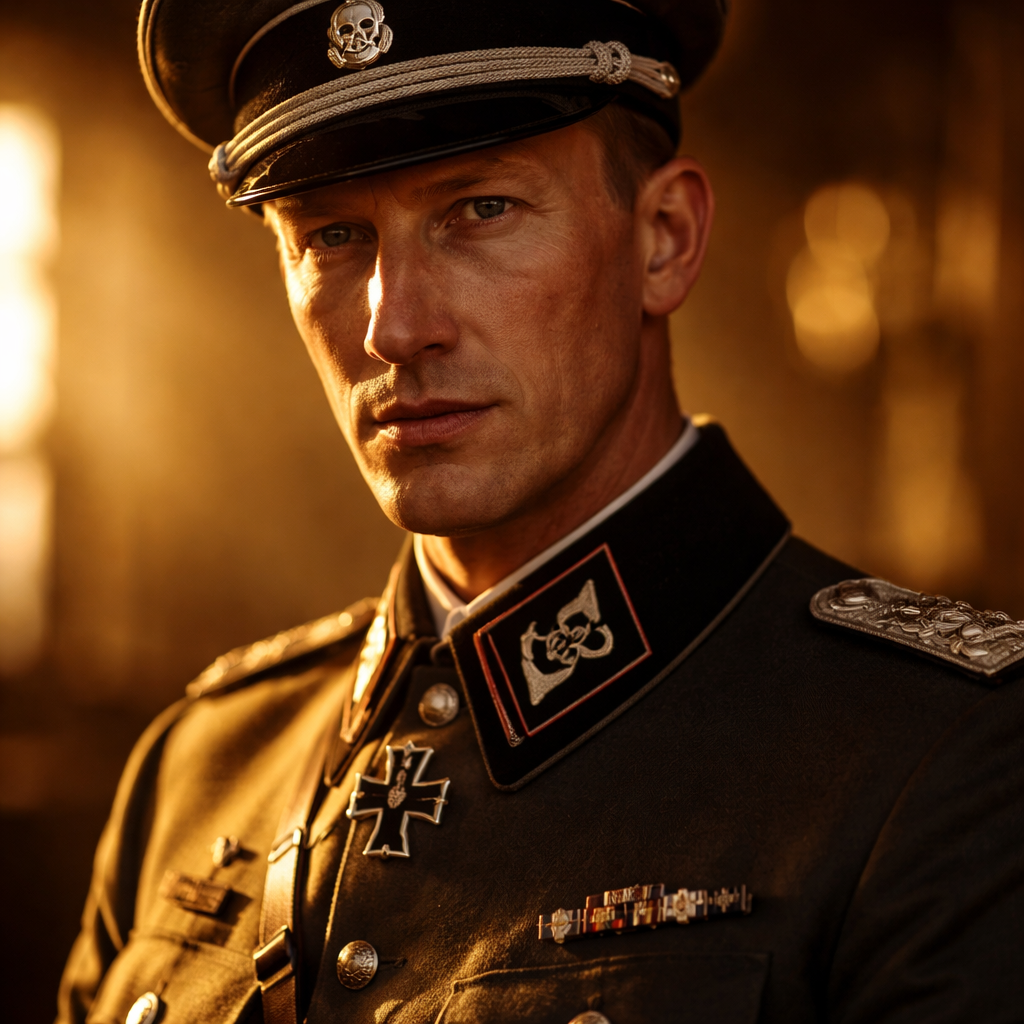
Reinhard Heydrich took eight days to die. The highest-ranking Nazi official assassinated during World War II, Heydrich succumbed to septicemia on June 4, 1942, in a Prague hospital. The infection had set in after fragments of horsehair upholstery from his Mercedes were driven into his spleen by a modified anti-tank grenade thrown by Czech commandos on May 27. Heydrich was the architect of some of the Third Reich’s most systematic atrocities. As head of the Reich Main Security Office, he controlled the Gestapo, the SD intelligence service, and the Einsatzgruppen mobile killing squads that murdered over a million Jews in Eastern Europe. In January 1942, he chaired the Wannsee Conference, a ninety-minute meeting of senior bureaucrats that formalized the logistics of the Final Solution. Hitler called him "the man with the iron heart." Operation Anthropoid, the assassination mission, was planned by the Czechoslovak government-in-exile in London and carried out by two soldiers: Jozef Gabcik, a Slovak, and Jan Kubis, a Czech. They parachuted into the Protectorate of Bohemia and Moravia in December 1941 and spent months preparing. On the morning of May 27, they ambushed Heydrich’s open-topped car at a hairpin turn in Prague. Gabcik’s Sten gun jammed. Kubis threw a modified grenade that exploded against the car’s rear wheel. Heydrich, wounded but still standing, drew his pistol and chased Gabcik before collapsing. The Nazi reprisal was savage. SS forces destroyed the village of Lidice on June 10, shooting all 173 men and boys over fifteen, deporting the women to Ravensbruck concentration camp, and gassing most of the children at Chelmno. The village of Lezaky was similarly annihilated. Gabcik and Kubis, betrayed by a fellow resistance member, died fighting in the crypt of the Church of Saints Cyril and Methodius in Prague on June 18. The assassination achieved its strategic goal: it demonstrated that Nazi occupation could be resisted, but the cost was measured in entire communities.
The world's first food monopoly wasn't wine. Wasn't bread. It was mold. King Charles VI handed the village of Roquefort-sur-Soulzon exclusive rights to ripen their famous blue cheese inside the Combalou caves — the only place with the exact humidity and *Penicillium roqueforti* spores that made it work. Competitors who tried elsewhere faced heavy fines. A tiny French village, population barely a few hundred, now legally owned a flavor. That monopoly still holds today. You're not eating Roquefort. You're eating a 600-year-old royal decree.
Lightning hit St Paul's steeple on a June afternoon and within hours, 500 years of medieval stonework were gone. The blaze burned so hot that molten lead from the roof poured through the streets below. Queen Elizabeth I launched a national fundraising campaign to rebuild it. Architects drew up plans. Money trickled in. But the steeple never went up again — and 95 years later, the Great Fire of 1666 finished off the rest. The cathedral that replaced it became Wren's masterpiece. Sometimes the lightning strike is the gift.
The colony was gone before anyone could explain it. Raleigh never actually set foot on Roanoke Island — he funded the 1584 expedition but stayed in England, sending Arthur Barlowe and Philip Amadas instead. They returned with glowing reports and two Algonquian men, Manteo and Wanchese. England was thrilled. But the 117 settlers who followed three years later vanished completely, leaving only the word "CROATOAN" carved into a post. Raleigh spent a fortune and never found them. The man who "founded" the colony didn't go, and the colony didn't stay.
Frederick the Great was 33 years old and already being called a fluke. His early victories dismissed as luck. Then came Hohenfriedberg, 4 a.m., June 4th — the Prussians attacked before the Austrians were even awake. Ten thousand Austrian casualties. The Prussian infantry covered six miles in silence and hit first. Prince Charles of Lorraine never recovered his reputation. But the real consequence wasn't the battle. It was what Frederick proved: that speed and surprise could beat numbers every time. Europe's armies spent the next century trying to copy him.
Fun Facts
Zodiac Sign
Gemini
May 21 -- Jun 20
Air sign. Adaptable, curious, and communicative.
Birthstone
Pearl
White / Cream
Symbolizes purity, innocence, and wisdom.
Next Birthday
--
days until June 4
Quote of the Day
“A traitor is everyone who does not agree with me.”
Share Your Birthday
Create a beautiful birthday card with events and famous birthdays for June 4.
Create Birthday CardExplore Nearby Dates
Popular Dates
Explore more about June 4 in history. See the full date page for all events, browse June, or look up another birthday. Play history games or talk to historical figures.