Today In History logo TIH

Today In History

June 25 in History

Your birthday shares the stage with stories that shaped the world. Born on this day: George Michael, Carly Simon, and Louis Mountbatten.

North Invades South: Korean War Begins
1950Event

North Invades South: Korean War Begins

Seventy-five thousand North Korean soldiers poured across the 38th parallel before dawn, and the Cold War turned hot for the first time. On June 25, 1950, the Korean People’s Army launched a full-scale invasion of South Korea with Soviet-supplied T-34 tanks, artillery, and aircraft, catching the South Korean military and its American advisors almost completely by surprise. Seoul fell within three days, and the South Korean army was in full retreat toward the southern coast. The invasion was the product of months of planning between North Korean leader Kim Il-sung and Soviet dictator Joseph Stalin. Kim had been pressing Stalin for permission to unify the Korean peninsula by force since 1949, and Stalin finally approved in early 1950 after Mao Zedong’s victory in China and the Soviet Union’s successful nuclear weapons test shifted his calculation of risk. A January 1950 speech by Secretary of State Dean Acheson, which excluded Korea from the American defensive perimeter in Asia, may have reinforced Stalin’s belief that the United States would not intervene. The South Korean military was badly outmatched. The Republic of Korea Army had no tanks, limited artillery, and roughly 98,000 troops, many of them poorly trained conscripts. The North Koreans advanced with 150 T-34 tanks and overwhelming firepower. American occupation forces in Japan, the closest military assets, were understrength and unprepared for combat after years of garrison duty. The invasion triggered an emergency session of the United Nations Security Council, which passed a resolution condemning the attack and calling for member states to assist South Korea. The Soviet Union, which could have vetoed the resolution, was boycotting the Council over the exclusion of Communist China. President Truman committed American air and naval forces on June 27 and ground troops on June 30, beginning a three-year war that would kill more than 2.5 million civilians and leave the Korean peninsula divided to this day.

Famous Birthdays

George Michael
George Michael

1963–2009

Peyo
Peyo

1928–1992

Rain
Rain

b. 1982

Jimmie Walker

Jimmie Walker

b. 1947

B. J. Habibie

B. J. Habibie

1936–2019

David Paich

David Paich

b. 1954

Ian McDonald

Ian McDonald

b. 1946

Madan Mohan

Madan Mohan

d. 1975

Tim Finn

Tim Finn

b. 1952

Walther Nernst

Walther Nernst

1864–1941

Historical Events

Seventy-five thousand North Korean soldiers poured across the 38th parallel before dawn, and the Cold War turned hot for the first time. On June 25, 1950, the Korean People’s Army launched a full-scale invasion of South Korea with Soviet-supplied T-34 tanks, artillery, and aircraft, catching the South Korean military and its American advisors almost completely by surprise. Seoul fell within three days, and the South Korean army was in full retreat toward the southern coast.

The invasion was the product of months of planning between North Korean leader Kim Il-sung and Soviet dictator Joseph Stalin. Kim had been pressing Stalin for permission to unify the Korean peninsula by force since 1949, and Stalin finally approved in early 1950 after Mao Zedong’s victory in China and the Soviet Union’s successful nuclear weapons test shifted his calculation of risk. A January 1950 speech by Secretary of State Dean Acheson, which excluded Korea from the American defensive perimeter in Asia, may have reinforced Stalin’s belief that the United States would not intervene.

The South Korean military was badly outmatched. The Republic of Korea Army had no tanks, limited artillery, and roughly 98,000 troops, many of them poorly trained conscripts. The North Koreans advanced with 150 T-34 tanks and overwhelming firepower. American occupation forces in Japan, the closest military assets, were understrength and unprepared for combat after years of garrison duty.

The invasion triggered an emergency session of the United Nations Security Council, which passed a resolution condemning the attack and calling for member states to assist South Korea. The Soviet Union, which could have vetoed the resolution, was boycotting the Council over the exclusion of Communist China. President Truman committed American air and naval forces on June 27 and ground troops on June 30, beginning a three-year war that would kill more than 2.5 million civilians and leave the Korean peninsula divided to this day.
1950

Seventy-five thousand North Korean soldiers poured across the 38th parallel before dawn, and the Cold War turned hot for the first time. On June 25, 1950, the Korean People’s Army launched a full-scale invasion of South Korea with Soviet-supplied T-34 tanks, artillery, and aircraft, catching the South Korean military and its American advisors almost completely by surprise. Seoul fell within three days, and the South Korean army was in full retreat toward the southern coast. The invasion was the product of months of planning between North Korean leader Kim Il-sung and Soviet dictator Joseph Stalin. Kim had been pressing Stalin for permission to unify the Korean peninsula by force since 1949, and Stalin finally approved in early 1950 after Mao Zedong’s victory in China and the Soviet Union’s successful nuclear weapons test shifted his calculation of risk. A January 1950 speech by Secretary of State Dean Acheson, which excluded Korea from the American defensive perimeter in Asia, may have reinforced Stalin’s belief that the United States would not intervene. The South Korean military was badly outmatched. The Republic of Korea Army had no tanks, limited artillery, and roughly 98,000 troops, many of them poorly trained conscripts. The North Koreans advanced with 150 T-34 tanks and overwhelming firepower. American occupation forces in Japan, the closest military assets, were understrength and unprepared for combat after years of garrison duty. The invasion triggered an emergency session of the United Nations Security Council, which passed a resolution condemning the attack and calling for member states to assist South Korea. The Soviet Union, which could have vetoed the resolution, was boycotting the Council over the exclusion of Communist China. President Truman committed American air and naval forces on June 27 and ground troops on June 30, beginning a three-year war that would kill more than 2.5 million civilians and leave the Korean peninsula divided to this day.

Two mathematicians who could read the Soviet Union’s most sensitive communications walked into the American Embassy in Mexico City and asked for tickets to Moscow. Bernon Mitchell and William Martin, both cryptanalysts at the National Security Agency, defected to the Soviet Union in the summer of 1960 after growing disillusioned with what they considered illegal American surveillance programs. Their defection was the worst security breach in NSA history and exposed secrets the agency would spend decades trying to recover.

Mitchell and Martin had worked at the NSA since 1957, with top-secret clearances giving them access to some of the agency’s most closely held programs. Both men were troubled by the NSA’s interception of communications from allied nations, including France, and by what they viewed as violations of American law. They made their decision to defect in late 1959 and left the United States in June 1960 under the pretense of a vacation, traveling through Mexico and Cuba to reach the Soviet Union.

On September 6, 1960, the two men appeared at a Moscow press conference and publicly revealed details of NSA operations, including the fact that the agency routinely intercepted and decoded communications of more than forty nations. The damage was staggering: their disclosures compromised active intelligence programs, burned code-breaking techniques, and revealed the scope of American signals intelligence to every government on Earth. The Soviets and their allies changed their encryption systems, blinding American intelligence for years.

The NSA implemented sweeping security reforms in the aftermath, including polygraph requirements, stricter background checks, and psychological screening for analysts. Congress held classified hearings, and several other NSA employees were investigated. Mitchell and Martin lived out their lives in the Soviet Union, largely forgotten, with Martin dying in 1987 and Mitchell in 2001. The agency they betrayed would not publicly acknowledge its own existence until years after their defection.
1960

Two mathematicians who could read the Soviet Union’s most sensitive communications walked into the American Embassy in Mexico City and asked for tickets to Moscow. Bernon Mitchell and William Martin, both cryptanalysts at the National Security Agency, defected to the Soviet Union in the summer of 1960 after growing disillusioned with what they considered illegal American surveillance programs. Their defection was the worst security breach in NSA history and exposed secrets the agency would spend decades trying to recover. Mitchell and Martin had worked at the NSA since 1957, with top-secret clearances giving them access to some of the agency’s most closely held programs. Both men were troubled by the NSA’s interception of communications from allied nations, including France, and by what they viewed as violations of American law. They made their decision to defect in late 1959 and left the United States in June 1960 under the pretense of a vacation, traveling through Mexico and Cuba to reach the Soviet Union. On September 6, 1960, the two men appeared at a Moscow press conference and publicly revealed details of NSA operations, including the fact that the agency routinely intercepted and decoded communications of more than forty nations. The damage was staggering: their disclosures compromised active intelligence programs, burned code-breaking techniques, and revealed the scope of American signals intelligence to every government on Earth. The Soviets and their allies changed their encryption systems, blinding American intelligence for years. The NSA implemented sweeping security reforms in the aftermath, including polygraph requirements, stricter background checks, and psychological screening for analysts. Congress held classified hearings, and several other NSA employees were investigated. Mitchell and Martin lived out their lives in the Soviet Union, largely forgotten, with Martin dying in 1987 and Mitchell in 2001. The agency they betrayed would not publicly acknowledge its own existence until years after their defection.

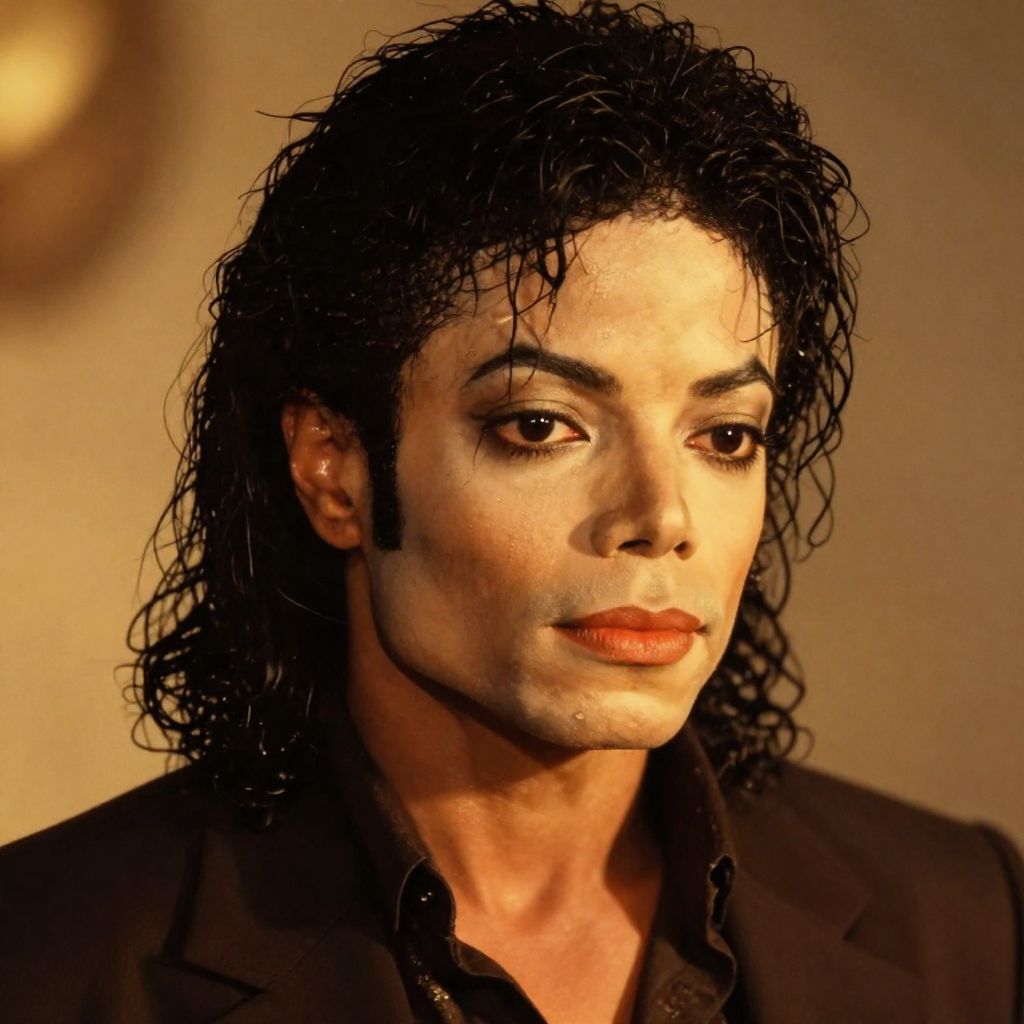
Conrad Murray injected propofol into Michael Jackson’s bloodstream in a bedroom, using a drug designed exclusively for hospital operating rooms, and the greatest entertainer of his generation never woke up. Jackson died on June 25, 2009, at age 50 in his rented Holmby Hills mansion in Los Angeles, just weeks before a planned 50-concert comeback residency at London’s O2 Arena that had sold out in hours.

Jackson’s influence on popular music and culture was unmatched in the second half of the twentieth century. "Thriller," released in 1982, remains the best-selling album in history, with estimated sales exceeding 70 million copies worldwide. He invented the modern music video as an art form, pioneered dance moves that became part of the global vocabulary, and broke racial barriers at MTV when the network resisted playing Black artists. His 1983 performance of the moonwalk on the Motown 25 television special is one of the most replayed moments in entertainment history.

His final years were defined by financial distress, legal battles, and physical deterioration. Jackson’s 2005 acquittal on child molestation charges left him emotionally shattered and deeply in debt. He relocated to Bahrain, then Ireland, before returning to the United States for the "This Is It" concert series. Rehearsal footage showed flashes of his old brilliance, but behind the scenes, he was dependent on a cocktail of prescription drugs to manage chronic pain and insomnia. Murray, his personal physician, had been administering propofol nightly as a sleep aid for weeks.

Murray was convicted of involuntary manslaughter in 2011 and served two years in prison. Jackson’s estate, burdened with hundreds of millions in debt at the time of his death, has since earned billions through music sales, licensing deals, and a Cirque du Soleil show, making him more commercially successful dead than almost any artist alive.
2009

Conrad Murray injected propofol into Michael Jackson’s bloodstream in a bedroom, using a drug designed exclusively for hospital operating rooms, and the greatest entertainer of his generation never woke up. Jackson died on June 25, 2009, at age 50 in his rented Holmby Hills mansion in Los Angeles, just weeks before a planned 50-concert comeback residency at London’s O2 Arena that had sold out in hours. Jackson’s influence on popular music and culture was unmatched in the second half of the twentieth century. "Thriller," released in 1982, remains the best-selling album in history, with estimated sales exceeding 70 million copies worldwide. He invented the modern music video as an art form, pioneered dance moves that became part of the global vocabulary, and broke racial barriers at MTV when the network resisted playing Black artists. His 1983 performance of the moonwalk on the Motown 25 television special is one of the most replayed moments in entertainment history. His final years were defined by financial distress, legal battles, and physical deterioration. Jackson’s 2005 acquittal on child molestation charges left him emotionally shattered and deeply in debt. He relocated to Bahrain, then Ireland, before returning to the United States for the "This Is It" concert series. Rehearsal footage showed flashes of his old brilliance, but behind the scenes, he was dependent on a cocktail of prescription drugs to manage chronic pain and insomnia. Murray, his personal physician, had been administering propofol nightly as a sleep aid for weeks. Murray was convicted of involuntary manslaughter in 2011 and served two years in prison. Jackson’s estate, burdened with hundreds of millions in debt at the time of his death, has since earned billions through music sales, licensing deals, and a Cirque du Soleil show, making him more commercially successful dead than almost any artist alive.

Lakota, Northern Cheyenne, and Arapaho warriors annihilated five companies of the 7th Cavalry in the most complete military defeat the United States Army suffered during the Indian Wars. On June 25, 1876, Lieutenant Colonel George Armstrong Custer led approximately 210 men in a direct attack on a massive encampment along the Little Bighorn River in Montana Territory, where an estimated 7,000 to 8,000 Native Americans, including 1,500 to 2,000 warriors, had gathered for the summer buffalo hunt.

Custer had divided his regiment of roughly 600 men into three battalions, sending Captain Frederick Benteen on a scouting mission to the south and Major Marcus Reno to attack the village from the south while Custer approached from the north. The plan depended on surprise and coordination, but Custer had no accurate intelligence about the size of the encampment. Reno’s attack was quickly repulsed, and his battalion was pinned down on a hilltop four miles from Custer’s position.

Warriors led by Crazy Horse, Gall, and other leaders surrounded Custer’s battalion on a ridge above the river. The fighting lasted perhaps an hour, though no soldier in Custer’s command survived to provide a timeline. Every man in the five companies was killed, their bodies found stripped and mutilated on the hillside when relief forces arrived two days later. Reno and Benteen’s combined force survived a two-day siege before the Native encampment broke up and dispersed.

The national shock was amplified by timing: news of the disaster reached the East during the country’s centennial celebrations. Public demand for retribution was overwhelming, and the Army launched a massive campaign that over the following year forced most of the Lakota and Cheyenne onto reservations. Sitting Bull fled to Canada; Crazy Horse surrendered in 1877 and was killed while in custody. The victory at Little Bighorn, the greatest military triumph of the Plains nations, accelerated the destruction of their way of life.
1876

Lakota, Northern Cheyenne, and Arapaho warriors annihilated five companies of the 7th Cavalry in the most complete military defeat the United States Army suffered during the Indian Wars. On June 25, 1876, Lieutenant Colonel George Armstrong Custer led approximately 210 men in a direct attack on a massive encampment along the Little Bighorn River in Montana Territory, where an estimated 7,000 to 8,000 Native Americans, including 1,500 to 2,000 warriors, had gathered for the summer buffalo hunt. Custer had divided his regiment of roughly 600 men into three battalions, sending Captain Frederick Benteen on a scouting mission to the south and Major Marcus Reno to attack the village from the south while Custer approached from the north. The plan depended on surprise and coordination, but Custer had no accurate intelligence about the size of the encampment. Reno’s attack was quickly repulsed, and his battalion was pinned down on a hilltop four miles from Custer’s position. Warriors led by Crazy Horse, Gall, and other leaders surrounded Custer’s battalion on a ridge above the river. The fighting lasted perhaps an hour, though no soldier in Custer’s command survived to provide a timeline. Every man in the five companies was killed, their bodies found stripped and mutilated on the hillside when relief forces arrived two days later. Reno and Benteen’s combined force survived a two-day siege before the Native encampment broke up and dispersed. The national shock was amplified by timing: news of the disaster reached the East during the country’s centennial celebrations. Public demand for retribution was overwhelming, and the Army launched a massive campaign that over the following year forced most of the Lakota and Cheyenne onto reservations. Sitting Bull fled to Canada; Crazy Horse surrendered in 1877 and was killed while in custody. The victory at Little Bighorn, the greatest military triumph of the Plains nations, accelerated the destruction of their way of life.

A Taoist monk sweeping sand from a cave corridor accidentally opened a sealed chamber that contained the greatest manuscript discovery of the twentieth century. Wang Yuanlu, a self-appointed guardian of the Mogao Caves near Dunhuang in western China, broke through a hidden wall in Cave 17 around June 1900, revealing a small room packed floor to ceiling with approximately 50,000 manuscripts, paintings, and printed documents dating from the fourth to the eleventh centuries.

The Mogao Caves are a complex of nearly 500 Buddhist temples carved into a cliff face along the ancient Silk Road. Monks had used them for meditation and worship for more than a thousand years, decorating them with elaborate murals and sculptures. Cave 17 had been sealed around the year 1000, possibly to protect its contents during a period of political instability, and then forgotten for nine centuries.

The collection was staggering in its scope and significance. Among the manuscripts was a copy of the Diamond Sutra dated 868 AD, the oldest known printed book in the world. The library contained Buddhist scriptures in Chinese, Tibetan, Sanskrit, and other languages, along with Confucian and Taoist texts, business contracts, government records, musical scores, and astronomical charts. The documents preserved a cross-section of Silk Road civilization at its peak.

Wang reported his discovery to local officials, who showed little interest. In 1907, the Hungarian-British archaeologist Aurel Stein arrived and persuaded Wang to part with thousands of manuscripts for a modest donation to the caves’ restoration. French sinologist Paul Pelliot followed the next year and selected the most valuable pieces. By the time the Chinese government ordered the remaining manuscripts transported to Beijing, roughly half the collection had been dispersed to museums in London, Paris, St. Petersburg, and Tokyo, where it remains today.
1900

A Taoist monk sweeping sand from a cave corridor accidentally opened a sealed chamber that contained the greatest manuscript discovery of the twentieth century. Wang Yuanlu, a self-appointed guardian of the Mogao Caves near Dunhuang in western China, broke through a hidden wall in Cave 17 around June 1900, revealing a small room packed floor to ceiling with approximately 50,000 manuscripts, paintings, and printed documents dating from the fourth to the eleventh centuries. The Mogao Caves are a complex of nearly 500 Buddhist temples carved into a cliff face along the ancient Silk Road. Monks had used them for meditation and worship for more than a thousand years, decorating them with elaborate murals and sculptures. Cave 17 had been sealed around the year 1000, possibly to protect its contents during a period of political instability, and then forgotten for nine centuries. The collection was staggering in its scope and significance. Among the manuscripts was a copy of the Diamond Sutra dated 868 AD, the oldest known printed book in the world. The library contained Buddhist scriptures in Chinese, Tibetan, Sanskrit, and other languages, along with Confucian and Taoist texts, business contracts, government records, musical scores, and astronomical charts. The documents preserved a cross-section of Silk Road civilization at its peak. Wang reported his discovery to local officials, who showed little interest. In 1907, the Hungarian-British archaeologist Aurel Stein arrived and persuaded Wang to part with thousands of manuscripts for a modest donation to the caves’ restoration. French sinologist Paul Pelliot followed the next year and selected the most valuable pieces. By the time the Chinese government ordered the remaining manuscripts transported to Beijing, roughly half the collection had been dispersed to museums in London, Paris, St. Petersburg, and Tokyo, where it remains today.

841

Three brothers tore the Carolingian Empire apart in a single afternoon. At Fontenay-en-Puisaye, Charles the Bald and Louis the German crushed Lothair I's forces so completely that Frankish chroniclers called it a massacre — tens of thousands dead in fields that ran red. But nobody celebrated. These were cousins, uncles, nephews. Frankish nobles on both sides. The winners were horrified by what they'd done. And that guilt drove them straight to a negotiating table. Two years later: the Treaty of Verdun. The blueprint for modern Europe, written in blood by men who wished they hadn't won.

1258

Venetian galleys destroyed a larger Genoese fleet at the Battle of Acre during the War of Saint Sabas, a conflict between Italian merchant republics over commercial rights in the Crusader states. The naval victory secured Venetian dominance in eastern Mediterranean trade for decades and deepened the factional warfare that was slowly destroying the remaining Crusader kingdoms from within.

1401

Authorities in the Swiss city of Schaffhausen tortured and executed thirty Jewish residents after accusations of blood libel, the recurring medieval falsehood that Jews used the blood of Christian children in religious rituals. The Schaffhausen massacre was one of dozens of similar episodes across Central Europe during the fourteenth and fifteenth centuries, in which Jewish communities were destroyed on the basis of fabricated charges. The blood libel accusation persisted for centuries as a tool for scapegoating and has been identified by historians as one of the most destructive antisemitic myths in European history.

1530

Seven German princes handed Charles V a document that was supposed to get them burned. Melanchthon wrote it — not Luther, who was banned from Augsburg entirely, watching from Coburg Castle miles away. The confession wasn't a rebellion. It was a peace offering, carefully worded to show Lutherans weren't heretics. Charles had it read aloud for two hours. He didn't condemn it that day. And that hesitation gave Protestantism the breathing room it needed to survive. The document meant to end a schism became the foundation of a permanent one.

1678

The University of Padua's church fathers refused to let her defend in the cathedral. Too sacred a space for a woman. So Elena Cornaro Piscopia defended her doctorate in the Padua city hall instead, in 1678, before a crowd so large people climbed through windows to watch. She'd mastered seven languages and could debate theology with cardinals. But the Church blocked her original application for a theology degree entirely. Philosophy was the compromise. The first woman to earn a doctorate had to settle for second choice.

1876

Custer thought he'd found a small village. He split his 700 men into three columns anyway, outnumbered and not knowing it. Within an hour, his 210 were gone — surrounded on a ridge now called Last Stand Hill, dead before reinforcements got close. Sitting Bull had predicted it in a vision days earlier: soldiers falling from the sky. But the U.S. Army's humiliation didn't slow the wars — it accelerated them. The massacre of Custer's men became the justification for everything that followed.

1906

Stanford White was shot dead on the rooftop of Madison Square Garden — a building he designed. Harry Thaw pulled the trigger in front of hundreds of dinner guests, then calmly handed the smoking pistol to a showgirl. His motive: White had allegedly seduced Thaw's wife, Evelyn Nesbit, years earlier. The trial became America's first "Trial of the Century." Thaw was found not guilty by reason of insanity. But here's the thing — White's murder didn't destroy his reputation. It made him immortal.

1923

Two men stayed airborne for 37 hours straight by grabbing a rubber hose dangling from another plane flying inches overhead. Smith and Richter didn't land. They just kept reaching up. The DH-4B biplane over Rockwell Field, San Diego, was refueled 15 times mid-flight — each handoff a controlled disaster waiting to happen. But it worked. And that single stunt rewired how militaries thought about range, power, and reach. Every long-range bomber, every transoceanic flight, every drone that never lands traces back to two guys grabbing a hose.

1941

Finland had already lost 11% of its territory to the Soviet Union in the Winter War of 1940. So when Germany launched Operation Barbarossa, Finnish commanders saw their opening. Not revenge, officially — Finland called it a "defensive war." But they pushed well beyond their old borders. Marshal Mannerheim's troops recaptured Karelia and kept going. The Allies noticed. Britain actually declared war on Finland in December 1941. A democracy, fighting alongside the Nazis, at war with the British. The optics were complicated. The desperation wasn't.

American and British warships sailed within range of German coastal batteries and traded fire for hours in one of the most aggressive naval bombardments of the Normandy campaign. On June 25, 1944, a task force including three battleships, four cruisers, and eleven destroyers opened fire on fortified positions surrounding the port of Cherbourg, supporting the U.S. VII Corps’ ground assault on the critical harbor.

Cherbourg was the primary objective of the American sector after the D-Day landings on June 6. The Allies desperately needed a deep-water port to sustain the massive flow of supplies required for the breakout from Normandy. The artificial Mulberry harbors at Omaha and Gold beaches had been badly damaged by a severe storm on June 19-22, making Cherbourg’s capture even more urgent. General J. Lawton Collins’s VII Corps had been fighting down the Cotentin Peninsula for three weeks to reach the port.

The naval bombardment was intended to suppress the German coastal batteries that were slowing the ground advance. Rear Admiral Morton Deyo commanded the task force, which included USS Texas, USS Nevada, and USS Arkansas. The engagement was costly on both sides: German guns scored hits on several Allied ships, badly damaging USS Texas and the destroyer USS Barton. The battleship Nevada took direct hits that started fires aboard. Allied shells, in turn, silenced several battery positions and destroyed ammunition dumps.

German commander Generalleutnant Karl-Wilhelm von Schlieben surrendered the Cherbourg garrison on June 27, but the Germans had systematically demolished the port facilities before capitulation. Mines, sunken ships, and destroyed cranes rendered the harbor unusable for weeks. Allied engineers worked around the clock to restore operations, and Cherbourg did not reach full capacity until September. The port eventually handled more cargo than all other European ports combined during the final months of the war.
1944

American and British warships sailed within range of German coastal batteries and traded fire for hours in one of the most aggressive naval bombardments of the Normandy campaign. On June 25, 1944, a task force including three battleships, four cruisers, and eleven destroyers opened fire on fortified positions surrounding the port of Cherbourg, supporting the U.S. VII Corps’ ground assault on the critical harbor. Cherbourg was the primary objective of the American sector after the D-Day landings on June 6. The Allies desperately needed a deep-water port to sustain the massive flow of supplies required for the breakout from Normandy. The artificial Mulberry harbors at Omaha and Gold beaches had been badly damaged by a severe storm on June 19-22, making Cherbourg’s capture even more urgent. General J. Lawton Collins’s VII Corps had been fighting down the Cotentin Peninsula for three weeks to reach the port. The naval bombardment was intended to suppress the German coastal batteries that were slowing the ground advance. Rear Admiral Morton Deyo commanded the task force, which included USS Texas, USS Nevada, and USS Arkansas. The engagement was costly on both sides: German guns scored hits on several Allied ships, badly damaging USS Texas and the destroyer USS Barton. The battleship Nevada took direct hits that started fires aboard. Allied shells, in turn, silenced several battery positions and destroyed ammunition dumps. German commander Generalleutnant Karl-Wilhelm von Schlieben surrendered the Cherbourg garrison on June 27, but the Germans had systematically demolished the port facilities before capitulation. Mines, sunken ships, and destroyed cranes rendered the harbor unusable for weeks. Allied engineers worked around the clock to restore operations, and Cherbourg did not reach full capacity until September. The port eventually handled more cargo than all other European ports combined during the final months of the war.

Fun Facts

Zodiac Sign

Cancer

Jun 21 -- Jul 22

Water sign. Loyal, emotional, and nurturing.

Birthstone

Pearl

White / Cream

Symbolizes purity, innocence, and wisdom.

Next Birthday

--

days until June 25

Quote of the Day

“"Doublethink" means the power of holding two contradictory beliefs in one's mind simultaneously, and accepting both of them.”

Share Your Birthday

Create a beautiful birthday card with events and famous birthdays for June 25.

Create Birthday Card

Explore Nearby Dates

Popular Dates

Explore more about June 25 in history. See the full date page for all events, browse June, or look up another birthday. Play history games or talk to historical figures.