Today In History logo TIH

Today In History

August 11 in History

Your birthday shares the stage with stories that shaped the world. Born on this day: Aaron Klug, Gustavo Cerati, and Pervez Musharraf.

Watts Erupts: Six Days of Riots Tear Los Angeles
1965Event

Watts Erupts: Six Days of Riots Tear Los Angeles

A routine traffic stop on a sweltering August evening in South Los Angeles became the spark for one of the most destructive urban uprisings in American history. California Highway Patrol officer Lee Minikus pulled over 21-year-old Marquette Frye near 116th Street and Avalon Boulevard, and what began as a drunk driving arrest escalated into a physical confrontation as a crowd gathered and Frye's mother intervened. Within hours, the Watts neighborhood erupted. The conditions that fueled the explosion had been building for decades. Black residents of Watts lived in one of the most overcrowded, underserved communities in Los Angeles, trapped by racially restrictive housing covenants and systematic disinvestment. Unemployment ran at roughly 30 percent. The Los Angeles Police Department, under Chief William Parker, had earned a reputation for aggressive tactics in Black neighborhoods that made every police encounter a potential flashpoint. For six days starting August 11, 1965, rioters set fires, looted businesses, and battled police and National Guard troops across a 46-square-mile area. Governor Pat Brown deployed 14,000 National Guard soldiers to restore order. By the time the violence subsided on August 17, 34 people were dead, more than 1,000 were injured, and roughly 3,400 had been arrested. Property damage exceeded $40 million, equivalent to more than $375 million today. The McCone Commission, appointed to investigate the causes, produced a report that critics dismissed as superficial. But the Watts uprising forced a national reckoning with the gap between the legal victories of the civil rights movement and the lived reality of Black Americans in Northern and Western cities. The rebellion made clear that racial injustice was not exclusively a Southern problem.

Famous Birthdays

Aaron Klug

Aaron Klug

1926–2018

Gustavo Cerati

Gustavo Cerati

d. 2014

Pervez Musharraf

Pervez Musharraf

d. 2023

Charley Paddock

Charley Paddock

d. 1943

Christiaan Eijkman

Christiaan Eijkman

1858–1930

Frederick W. Smith

Frederick W. Smith

b. 1944

Joe Jackson

Joe Jackson

1928–2018

Shinji Mikami

Shinji Mikami

b. 1965

Historical Events

Babe Ruth connected with a pitch from Willis Hudlin at League Park in Cleveland on August 11, 1929, and sent it over the fence for home run number 500. No other baseball player had ever reached that milestone. Ruth, characteristically, made it look routine, adding a second homer later in the game as the Yankees lost to the Indians 6-5.

The number itself was staggering by the standards of the era. When Ruth entered the major leagues with the Boston Red Sox in 1914, the single-season home run record stood at 27. He shattered it with 29 in 1919, then obliterated his own mark with 54 in 1920 and 59 in 1921. Entire teams struggled to match his output. Ruth did not merely play the game differently; he remade it.

By the time he reached 500, Ruth had already transformed baseball from a sport built on bunts, stolen bases, and pitching duels into one defined by power. The "live ball era" owed its existence partly to changes in equipment and rules, but Ruth was its avatar. Fans packed stadiums to watch him swing, and the Yankees built their cathedral in the Bronx largely on the revenue his celebrity generated.

Ruth would finish his career in 1935 with 714 home runs, a record that stood for 39 years until Hank Aaron surpassed it in 1974. But number 500 marked the moment when his dominance became numerically unprecedented. No player would join the 500 home run club until Jimmie Foxx did so in 1940, eleven years later. The milestone established a benchmark that remains one of baseball's most exclusive achievements.
1929

Babe Ruth connected with a pitch from Willis Hudlin at League Park in Cleveland on August 11, 1929, and sent it over the fence for home run number 500. No other baseball player had ever reached that milestone. Ruth, characteristically, made it look routine, adding a second homer later in the game as the Yankees lost to the Indians 6-5. The number itself was staggering by the standards of the era. When Ruth entered the major leagues with the Boston Red Sox in 1914, the single-season home run record stood at 27. He shattered it with 29 in 1919, then obliterated his own mark with 54 in 1920 and 59 in 1921. Entire teams struggled to match his output. Ruth did not merely play the game differently; he remade it. By the time he reached 500, Ruth had already transformed baseball from a sport built on bunts, stolen bases, and pitching duels into one defined by power. The "live ball era" owed its existence partly to changes in equipment and rules, but Ruth was its avatar. Fans packed stadiums to watch him swing, and the Yankees built their cathedral in the Bronx largely on the revenue his celebrity generated. Ruth would finish his career in 1935 with 714 home runs, a record that stood for 39 years until Hank Aaron surpassed it in 1974. But number 500 marked the moment when his dominance became numerically unprecedented. No player would join the 500 home run club until Jimmie Foxx did so in 1940, eleven years later. The milestone established a benchmark that remains one of baseball's most exclusive achievements.

A Hollywood actress and an avant-garde composer walked into the U.S. Patent Office on August 11, 1942, with an idea that would take half a century to find its true purpose. Hedy Lamarr and George Antheil received Patent No. 2,292,387 for a "Secret Communication System" that used frequency-hopping to prevent the jamming of radio-controlled torpedoes. The Navy shelved it. The technology eventually became foundational to Bluetooth, Wi-Fi, and GPS.

Lamarr, born Hedwig Eva Maria Kiesler in Vienna, was far more than the glamorous star MGM marketed to audiences. She had fled a controlling marriage to Austrian arms dealer Fritz Mandl, who had entertained Nazi officials at dinner parties where military technology was openly discussed. Lamarr absorbed those conversations. After escaping to America and establishing herself in Hollywood, she began tinkering with inventions in her spare time, driven by a desire to help the Allied war effort after learning that German U-boats were sinking refugee ships.

She met Antheil, known for his experimental compositions involving synchronized player pianos, at a dinner party. Their collaboration was logical: Lamarr conceived the idea of rapidly switching radio frequencies between transmitter and receiver, making signals nearly impossible to intercept. Antheil contributed the synchronization mechanism, drawing on his experience coordinating mechanical instruments.

The military deemed the system impractical for wartime use, and the patent expired in 1959 without generating a cent for its inventors. But engineers at Sylvania independently developed similar technology during the Cuban Missile Crisis, and by the 1980s, spread-spectrum techniques became central to secure military communications. The commercial applications followed in the 1990s. Lamarr received belated recognition with the Electronic Frontier Foundation Pioneer Award in 1997, three years before her death.
1942

A Hollywood actress and an avant-garde composer walked into the U.S. Patent Office on August 11, 1942, with an idea that would take half a century to find its true purpose. Hedy Lamarr and George Antheil received Patent No. 2,292,387 for a "Secret Communication System" that used frequency-hopping to prevent the jamming of radio-controlled torpedoes. The Navy shelved it. The technology eventually became foundational to Bluetooth, Wi-Fi, and GPS. Lamarr, born Hedwig Eva Maria Kiesler in Vienna, was far more than the glamorous star MGM marketed to audiences. She had fled a controlling marriage to Austrian arms dealer Fritz Mandl, who had entertained Nazi officials at dinner parties where military technology was openly discussed. Lamarr absorbed those conversations. After escaping to America and establishing herself in Hollywood, she began tinkering with inventions in her spare time, driven by a desire to help the Allied war effort after learning that German U-boats were sinking refugee ships. She met Antheil, known for his experimental compositions involving synchronized player pianos, at a dinner party. Their collaboration was logical: Lamarr conceived the idea of rapidly switching radio frequencies between transmitter and receiver, making signals nearly impossible to intercept. Antheil contributed the synchronization mechanism, drawing on his experience coordinating mechanical instruments. The military deemed the system impractical for wartime use, and the patent expired in 1959 without generating a cent for its inventors. But engineers at Sylvania independently developed similar technology during the Cuban Missile Crisis, and by the 1980s, spread-spectrum techniques became central to secure military communications. The commercial applications followed in the 1990s. Lamarr received belated recognition with the Electronic Frontier Foundation Pioneer Award in 1997, three years before her death.

Three days before Pakistan formally came into existence, Muhammad Ali Jinnah stood before the Constituent Assembly in Karachi on August 11, 1947, and delivered a speech that has been fought over by secularists and Islamists ever since. The address laid out a vision of religious tolerance that appeared to contradict the two-nation theory upon which the demand for Pakistan had been built.

Jinnah, a London-trained barrister who had once been called the "ambassador of Hindu-Muslim unity," had spent the previous decade arguing that Muslims and Hindus constituted separate nations requiring separate homelands. The Muslim League under his leadership had pressed the British and the Indian National Congress until partition became inevitable. Millions were already preparing to move across borders that had not yet been drawn.

Yet in his August 11 address, Jinnah told the Assembly that religion should have nothing to do with the business of the state. "You are free to go to your temples, you are free to go to your mosques or to any other places of worship in this State of Pakistan," he declared. He spoke of citizens being equal regardless of faith, caste, or creed, and envisioned a Pakistan where religious distinctions would fade from political life.

The speech created a tension that has never been resolved. Secularists cite it as proof that Pakistan's founder intended a pluralistic state. Religious conservatives argue it was a diplomatic courtesy to Hindu minorities, not a constitutional blueprint. Successive Pakistani governments have alternately embraced and suppressed the address. The text was omitted from school curricula for years and only partially restored.

Jinnah died just thirteen months later, leaving Pakistan without the one figure who might have settled the argument definitively.
1947

Three days before Pakistan formally came into existence, Muhammad Ali Jinnah stood before the Constituent Assembly in Karachi on August 11, 1947, and delivered a speech that has been fought over by secularists and Islamists ever since. The address laid out a vision of religious tolerance that appeared to contradict the two-nation theory upon which the demand for Pakistan had been built. Jinnah, a London-trained barrister who had once been called the "ambassador of Hindu-Muslim unity," had spent the previous decade arguing that Muslims and Hindus constituted separate nations requiring separate homelands. The Muslim League under his leadership had pressed the British and the Indian National Congress until partition became inevitable. Millions were already preparing to move across borders that had not yet been drawn. Yet in his August 11 address, Jinnah told the Assembly that religion should have nothing to do with the business of the state. "You are free to go to your temples, you are free to go to your mosques or to any other places of worship in this State of Pakistan," he declared. He spoke of citizens being equal regardless of faith, caste, or creed, and envisioned a Pakistan where religious distinctions would fade from political life. The speech created a tension that has never been resolved. Secularists cite it as proof that Pakistan's founder intended a pluralistic state. Religious conservatives argue it was a diplomatic courtesy to Hindu minorities, not a constitutional blueprint. Successive Pakistani governments have alternately embraced and suppressed the address. The text was omitted from school curricula for years and only partially restored. Jinnah died just thirteen months later, leaving Pakistan without the one figure who might have settled the argument definitively.

A routine traffic stop on a sweltering August evening in South Los Angeles became the spark for one of the most destructive urban uprisings in American history. California Highway Patrol officer Lee Minikus pulled over 21-year-old Marquette Frye near 116th Street and Avalon Boulevard, and what began as a drunk driving arrest escalated into a physical confrontation as a crowd gathered and Frye's mother intervened. Within hours, the Watts neighborhood erupted.

The conditions that fueled the explosion had been building for decades. Black residents of Watts lived in one of the most overcrowded, underserved communities in Los Angeles, trapped by racially restrictive housing covenants and systematic disinvestment. Unemployment ran at roughly 30 percent. The Los Angeles Police Department, under Chief William Parker, had earned a reputation for aggressive tactics in Black neighborhoods that made every police encounter a potential flashpoint.

For six days starting August 11, 1965, rioters set fires, looted businesses, and battled police and National Guard troops across a 46-square-mile area. Governor Pat Brown deployed 14,000 National Guard soldiers to restore order. By the time the violence subsided on August 17, 34 people were dead, more than 1,000 were injured, and roughly 3,400 had been arrested. Property damage exceeded $40 million, equivalent to more than $375 million today.

The McCone Commission, appointed to investigate the causes, produced a report that critics dismissed as superficial. But the Watts uprising forced a national reckoning with the gap between the legal victories of the civil rights movement and the lived reality of Black Americans in Northern and Western cities. The rebellion made clear that racial injustice was not exclusively a Southern problem.
1965

A routine traffic stop on a sweltering August evening in South Los Angeles became the spark for one of the most destructive urban uprisings in American history. California Highway Patrol officer Lee Minikus pulled over 21-year-old Marquette Frye near 116th Street and Avalon Boulevard, and what began as a drunk driving arrest escalated into a physical confrontation as a crowd gathered and Frye's mother intervened. Within hours, the Watts neighborhood erupted. The conditions that fueled the explosion had been building for decades. Black residents of Watts lived in one of the most overcrowded, underserved communities in Los Angeles, trapped by racially restrictive housing covenants and systematic disinvestment. Unemployment ran at roughly 30 percent. The Los Angeles Police Department, under Chief William Parker, had earned a reputation for aggressive tactics in Black neighborhoods that made every police encounter a potential flashpoint. For six days starting August 11, 1965, rioters set fires, looted businesses, and battled police and National Guard troops across a 46-square-mile area. Governor Pat Brown deployed 14,000 National Guard soldiers to restore order. By the time the violence subsided on August 17, 34 people were dead, more than 1,000 were injured, and roughly 3,400 had been arrested. Property damage exceeded $40 million, equivalent to more than $375 million today. The McCone Commission, appointed to investigate the causes, produced a report that critics dismissed as superficial. But the Watts uprising forced a national reckoning with the gap between the legal victories of the civil rights movement and the lived reality of Black Americans in Northern and Western cities. The rebellion made clear that racial injustice was not exclusively a Southern problem.

Governor Mario Lemos Pires abandoned the capital of Portuguese Timor on August 11, 1975, retreating to the offshore island of Atauro as civil war consumed Dili. His departure marked the effective end of four centuries of Portuguese colonial rule and the beginning of a catastrophe that would claim roughly a quarter of East Timor's population over the next two decades.

Portugal's Carnation Revolution in April 1974 had toppled the Lisbon dictatorship and triggered rapid decolonization across its empire. In East Timor, three political parties quickly formed with sharply different visions: Fretilin favored independence, the Timorese Democratic Union (UDT) initially sought continued ties with Portugal, and Apodeti advocated integration with neighboring Indonesia. Tensions between UDT and Fretilin escalated through 1975 as Portugal proved unable or unwilling to manage the transition.

UDT launched a coup on August 11, seizing key buildings in Dili and arresting Fretilin supporters. Fretilin counterattacked within days, armed in part by sympathetic Portuguese soldiers. The fighting killed between 1,500 and 2,000 people and sent tens of thousands fleeing into the mountains or across the border into Indonesian West Timor. Governor Pires, lacking the military resources or political authority to intervene, withdrew.

The power vacuum gave Indonesia the pretext it had been seeking. On December 7, 1975, Indonesian forces invaded East Timor with tacit approval from the United States and Australia. The subsequent occupation, lasting until 1999, involved systematic human rights abuses, forced displacement, and famine. An estimated 100,000 to 180,000 East Timorese died. East Timor finally achieved independence in 2002, becoming the first new sovereign state of the 21st century.
1975

Governor Mario Lemos Pires abandoned the capital of Portuguese Timor on August 11, 1975, retreating to the offshore island of Atauro as civil war consumed Dili. His departure marked the effective end of four centuries of Portuguese colonial rule and the beginning of a catastrophe that would claim roughly a quarter of East Timor's population over the next two decades. Portugal's Carnation Revolution in April 1974 had toppled the Lisbon dictatorship and triggered rapid decolonization across its empire. In East Timor, three political parties quickly formed with sharply different visions: Fretilin favored independence, the Timorese Democratic Union (UDT) initially sought continued ties with Portugal, and Apodeti advocated integration with neighboring Indonesia. Tensions between UDT and Fretilin escalated through 1975 as Portugal proved unable or unwilling to manage the transition. UDT launched a coup on August 11, seizing key buildings in Dili and arresting Fretilin supporters. Fretilin counterattacked within days, armed in part by sympathetic Portuguese soldiers. The fighting killed between 1,500 and 2,000 people and sent tens of thousands fleeing into the mountains or across the border into Indonesian West Timor. Governor Pires, lacking the military resources or political authority to intervene, withdrew. The power vacuum gave Indonesia the pretext it had been seeking. On December 7, 1975, Indonesian forces invaded East Timor with tacit approval from the United States and Australia. The subsequent occupation, lasting until 1999, involved systematic human rights abuses, forced displacement, and famine. An estimated 100,000 to 180,000 East Timorese died. East Timor finally achieved independence in 2002, becoming the first new sovereign state of the 21st century.

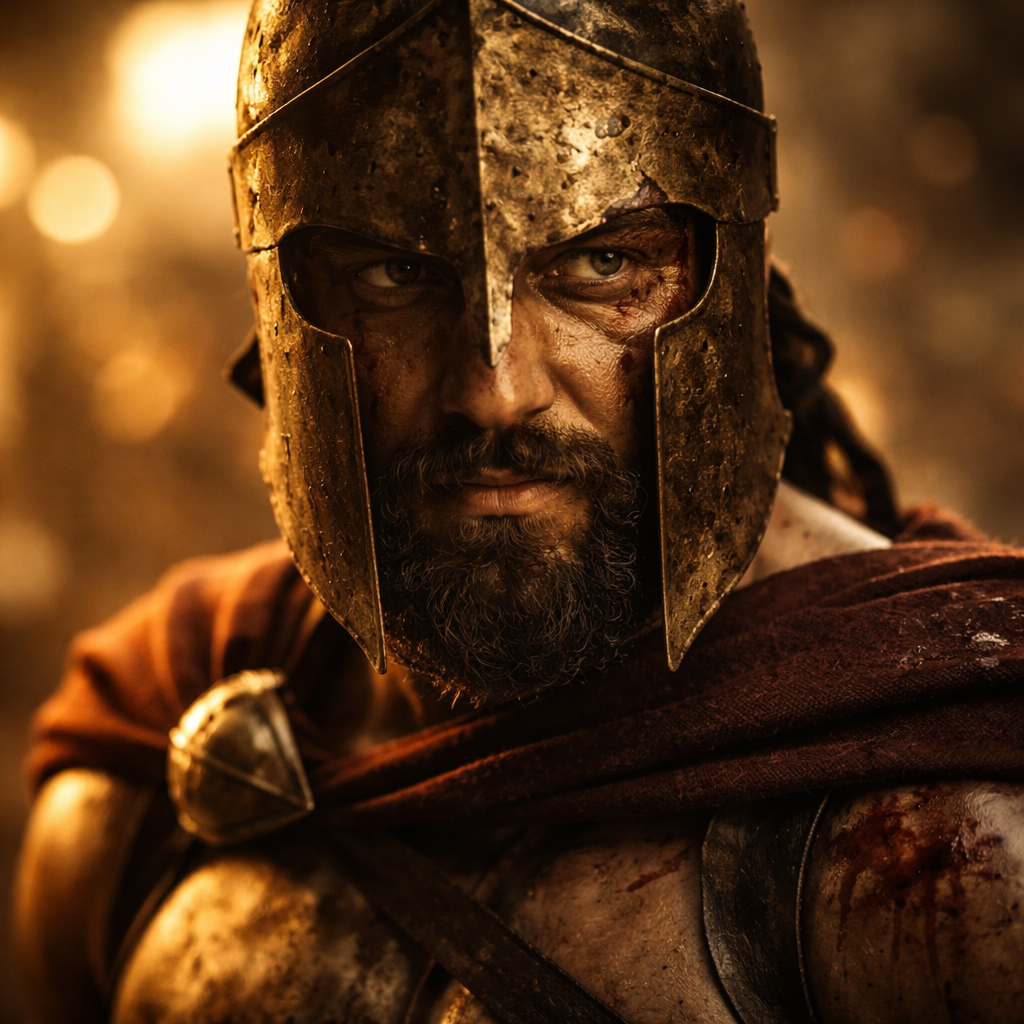
King Leonidas of Sparta chose to die. When a Greek traitor revealed a mountain path that would allow the Persian army to encircle the defenders at Thermopylae, most of the allied Greek force withdrew. Leonidas stayed with his 300 Spartans, 700 Thespians, and roughly 400 Thebans to hold the narrow coastal pass against an army that ancient sources numbered in the millions, though modern historians estimate at 100,000 to 300,000. They fought knowing they would not survive.

The battle took place in August 480 BC during the second Persian invasion of Greece. King Xerxes I had assembled the largest military force the ancient world had ever seen to avenge his father Darius's defeat at Marathon ten years earlier and to conquer the quarrelsome Greek city-states once and for all. The narrow pass at Thermopylae, between the mountains and the sea, was the best defensive position in central Greece. For two days, the Greeks held the pass against repeated Persian assaults, their heavy armor and superior close-combat training proving devastating in the confined terrain.

The breakthrough came from betrayal. A local Greek named Ephialtes informed Xerxes of the Anopaea path, a mountain trail that bypassed the pass entirely. Xerxes sent his elite Immortals along the route overnight. When Leonidas learned the Persians were behind him, he dismissed most of the allied forces and prepared for a final stand. The reasons for his decision remain debated — a Spartan prophecy, strategic calculation to cover the retreat, or simple warrior ethos — but the result was the same.

The Spartans and their allies fought to the last man on the third day, buying time for the Greek fleet to withdraw from nearby Artemisium and regroup at Salamis. Leonidas's sacrifice did not stop the Persian advance but gave Greece the time it needed. The naval victory at Salamis the following month turned the invasion, and the Persian army was destroyed at Plataea in 479 BC. The stand at Thermopylae became the founding myth of Western resistance against overwhelming odds.
480 BC

King Leonidas of Sparta chose to die. When a Greek traitor revealed a mountain path that would allow the Persian army to encircle the defenders at Thermopylae, most of the allied Greek force withdrew. Leonidas stayed with his 300 Spartans, 700 Thespians, and roughly 400 Thebans to hold the narrow coastal pass against an army that ancient sources numbered in the millions, though modern historians estimate at 100,000 to 300,000. They fought knowing they would not survive. The battle took place in August 480 BC during the second Persian invasion of Greece. King Xerxes I had assembled the largest military force the ancient world had ever seen to avenge his father Darius's defeat at Marathon ten years earlier and to conquer the quarrelsome Greek city-states once and for all. The narrow pass at Thermopylae, between the mountains and the sea, was the best defensive position in central Greece. For two days, the Greeks held the pass against repeated Persian assaults, their heavy armor and superior close-combat training proving devastating in the confined terrain. The breakthrough came from betrayal. A local Greek named Ephialtes informed Xerxes of the Anopaea path, a mountain trail that bypassed the pass entirely. Xerxes sent his elite Immortals along the route overnight. When Leonidas learned the Persians were behind him, he dismissed most of the allied forces and prepared for a final stand. The reasons for his decision remain debated — a Spartan prophecy, strategic calculation to cover the retreat, or simple warrior ethos — but the result was the same. The Spartans and their allies fought to the last man on the third day, buying time for the Greek fleet to withdraw from nearby Artemisium and regroup at Salamis. Leonidas's sacrifice did not stop the Persian advance but gave Greece the time it needed. The naval victory at Salamis the following month turned the invasion, and the Persian army was destroyed at Plataea in 479 BC. The stand at Thermopylae became the founding myth of Western resistance against overwhelming odds.

3114 BC

The Mesoamerican Long Count calendar begins on a date corresponding to August 11, 3114 BCE in the Gregorian calendar. The Maya didn't choose this date at random — it corresponded to a mythological creation event they understood to be the start of the current world. The calendar cycles back to zero every 5,125 years. When it did in December 2012, nothing happened.

480 BC

Greek and Persian fleets fought for three days near the headland of Artemisium while Leonidas held Thermopylae to the south. The Greek navy, outnumbered but fighting in familiar waters, inflicted enough damage to prove that Persian naval supremacy was not guaranteed. When news arrived that Thermopylae had fallen, the Greeks withdrew south to Salamis. The delay won at Artemisium gave Athens time to evacuate its population and set the stage for the decisive naval battle that would break Persian power in the Aegean.

490

The Goths under Theodoric the Great routed Odoacer's forces at the Battle of Adda, near Milan. The victory opened the road to Ravenna and effectively decided the fate of Italy — Theodoric would rule the peninsula for the next 33 years, establishing an Ostrogothic kingdom that preserved Roman administrative structures while governing through Germanic military power.

1332

Edward Balliol's small English-backed invasion force routed the much larger Scottish army under the Earl of Mar at Dupplin Moor, using a narrow valley to funnel the Scots into a killing zone where their numerical advantage became a liability. Scottish soldiers were crushed and suffocated in the press rather than killed by weapons. The victory briefly placed Balliol on the Scottish throne and reignited the Wars of Scottish Independence, providing Edward III of England with a pretext to intervene in Scottish affairs for years to come.

1473

The Ottoman army under Sultan Mehmed the Conqueror crushed the Aq Qoyunlu Turkmen confederation under Uzun Hassan at the Battle of Otlukbeli in eastern Anatolia. The decisive defeat ended the most serious challenge to Ottoman dominance in the region and eliminated the last rival capable of contesting their control of the eastern frontier. Uzun Hassan had cultivated alliances with Venice and other European powers to contain Ottoman expansion, but their assistance proved insufficient against the full weight of Mehmed's military machine.

1675

Imperial forces ambushed and routed a French army at the Battle of Konzer Brucke near Trier during the Franco-Dutch War, halting Louis XIV's advance along the Moselle River. The defeat forced France to abandon its planned offensive into the Rhineland and shifted the war's momentum back toward the grand alliance of European powers that had formed to contain French territorial expansion. The battle demonstrated that the coalition strategy of engaging France on multiple fronts could produce results even against the strongest army in Europe.

1858

Irishman Charles Barrington made the first ascent of the Eiger in the Bernese Alps, accompanied by Swiss guides Christian Almer and Peter Bohren, climbing the mountain's western flank. The achievement opened one of the Alpine Golden Age's most prized summits, though the far more treacherous north face would not be conquered for another eighty years. The Eiger's notorious Nordwand killed dozens of climbers before its first successful ascent in 1938, earning it the nickname "Mordwand" (Murder Wall) and cementing the mountain's reputation as the Alps' deadliest challenge.

1920

Latvia and Soviet Russia signed the peace treaty that formally ended the Latvian War of Independence and forced Moscow to relinquish all claims to Latvian territory. The agreement secured Latvia's sovereignty after two years of fighting against both German and Bolshevik forces, establishing the new nation-state that would endure until the Soviet occupation of 1940.

1920

The British government's refusal to release prisoners sparked a brutal standoff that claimed the life of Cork's Lord Mayor, Terence MacSwiney, after seventy-four days without food. His death galvanized global opinion against British rule in Ireland and forced the administration to negotiate with Sinn Féin leaders just months before the Anglo-Irish Treaty.

Fun Facts

Zodiac Sign

Leo

Jul 23 -- Aug 22

Fire sign. Creative, passionate, and generous.

Birthstone

Peridot

Olive green

Symbolizes power, healing, and protection from nightmares.

Next Birthday

--

days until August 11

Quote of the Day

“Either you deal with reality, or you can be sure reality is going to deal with you.”

Share Your Birthday

Create a beautiful birthday card with events and famous birthdays for August 11.

Create Birthday Card

Explore Nearby Dates

Popular Dates

Explore more about August 11 in history. See the full date page for all events, browse August, or look up another birthday. Play history games or talk to historical figures.