

What's Up, Doc? Bugs Bunny Debuts on Screen
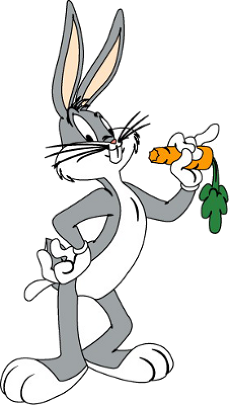
Voice actor Mel Blanc chomped on a raw carrot, asked "What's up, Doc?" to a bumbling hunter, and created the most recognizable animated character in American entertainment. Bugs Bunny made his official debut in "A Wild Hare," a Warner Bros. cartoon directed by Tex Avery that established every essential element of the character: the Brooklyn accent, the casual fearlessness, the carrot, and the ability to outsmart anyone who threatened him. Warner Bros. had been experimenting with rabbit characters since 1938, producing several cartoons featuring a manic, aggressive hare that audiences found more annoying than funny. Avery reimagined the character completely, replacing the frenetic energy with cool confidence. His Bugs Bunny did not panic when confronted by Elmer Fudd's shotgun. He leaned against his rabbit hole, crunched a carrot with studied indifference, and treated the hunter as a mild inconvenience rather than a mortal threat. Blanc, who would voice Bugs for more than forty years, claimed he based the accent on a blend of Brooklyn and Bronx speech patterns. The carrot was a conscious reference to Clark Gable's fast-talking, carrot-eating scene in "It Happened One Night," a movie audiences in 1940 would have recognized immediately. Blanc actually disliked raw carrots and spat each bite into a wastebasket between recording takes, since chewing and swallowing would have disrupted his vocal performance. "A Wild Hare" was nominated for the Academy Award for Best Animated Short Film and established Bugs as Warner Bros.' flagship character. Over the next two decades, he appeared in roughly 170 cartoons, consistently outperforming Disney characters at the box office. His popularity during World War II was enormous, with military units adopting him as an unofficial mascot. Bugs Bunny became the first cartoon character to appear on a United States postage stamp and remains the cultural mascot of Warner Bros. more than eighty years after his debut.
July 27, 1940
86 years ago
Key Figures & Places


What Else Happened on July 27
Siward the Stout marched 10,000 men across the Firth of Forth hunting a king who'd ruled Scotland for fourteen years. Macbeth met him somewhere in the highlands…
The German Emperor arrived with 100,000 crusaders at a city that couldn't possibly feed them all. Friedrich Barbarossa's army descended on Niš in July 1189, and…
Georgian forces crushed the Sultanate of Rum at the Battle of Basian, securing their dominance over the Caucasus. This victory halted the westward expansion of …
Philip II of France crushed the coalition forces of King John of England and the Holy Roman Empire at the Battle of Bouvines, ending the Angevin Empire’s domina…
Twenty-seven years old, leading three hundred horsemen. That's all Osman I commanded when he crossed into Byzantine Nicomedia's farmlands on July 27, 1299. A ca…
A 2,000-man Byzantine force marched to relieve Nicomedia, besieged by Osman I's warriors. They never made it. On July 27, 1302, near Bapheus, Ottoman cavalry sh…
Talk to History
Have a conversation with historical figures who witnessed this era. Ask questions, explore perspectives, and bring history to life.